
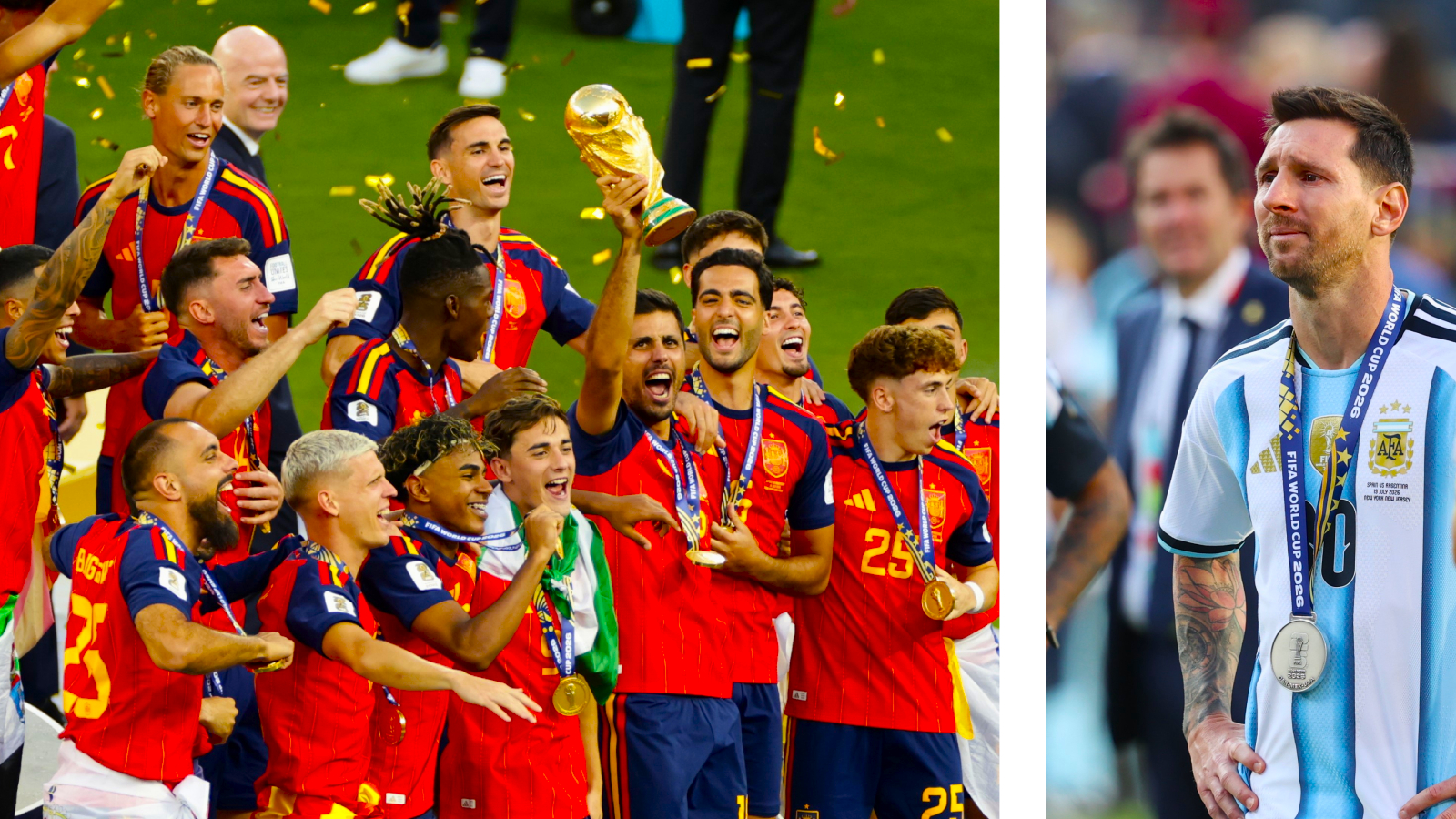
The FIFA World Cup Final is where legends are made and football history is rewritten. Millions of fans expected an unforgettable showdown between reigning world champions Argentina and an exciting Spanish side. While the scoreline suggested a close contest, the performance on the pitch told a very different story.

Spain delivered one of the most tactically dominant displays seen in a World Cup final. Their relentless pressing, intelligent positioning, patient possession, and defensive discipline completely neutralised Argentina’s attacking threat. Despite having Lionel Messi on the pitch, Argentina struggled to impose themselves, rarely finding rhythm throughout the match.
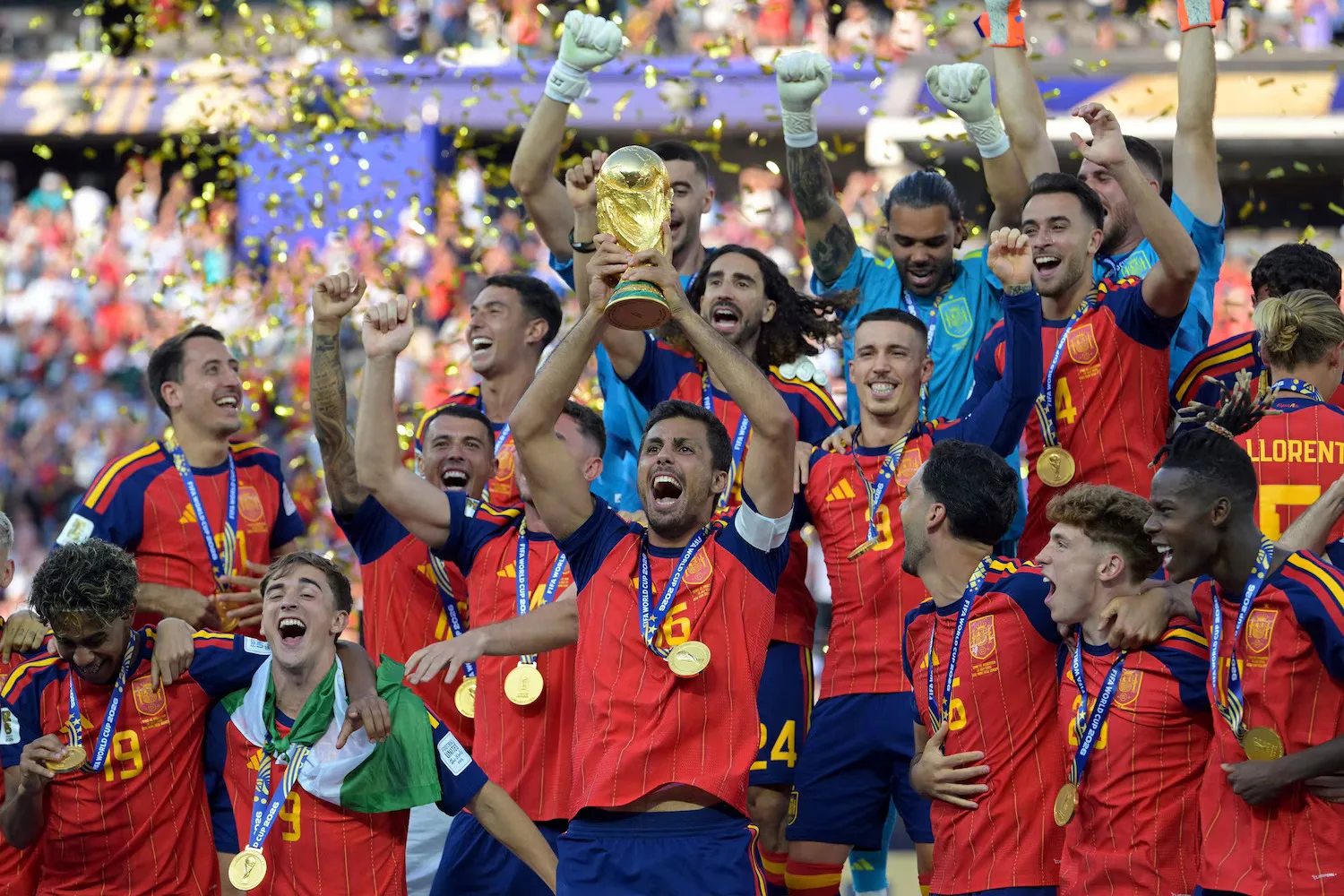
Spain’s victory wasn’t built on moments of individual brilliance alone—it was a triumph of teamwork, structure, and tactical excellence. Their disciplined approach eventually earned them the FIFA World Cup 2026 title and confirmed the arrival of a new generation of Spanish football.
A Final That Spain Controlled from Start to Finish
Finals are often tense affairs with both teams playing cautiously. This match was different.
From the opening whistle, Spain dictated the tempo. They monopolised possession, circulated the ball with confidence, and forced Argentina into long periods without meaningful possession.
Instead of chasing quick attacks, Spain patiently built from the back, stretching Argentina’s defensive shape before exploiting spaces in midfield.
Argentina spent much of the match defending deep rather than creating opportunities.
The result was one of the most one-sided tactical performances seen in recent World Cup finals.
Spain’s Midfield Dominance
If there was one area where Spain completely outplayed Argentina, it was midfield.
Spain’s midfield trio consistently:
- Controlled possession
- Won second balls
- Pressed aggressively after losing possession
- Progressed play with intelligent passing
- Prevented Argentina from launching counter-attacks
Every time Argentina regained the ball, Spain closed passing lanes almost immediately.
This constant pressure forced misplaced passes and prevented Argentina from establishing sustained attacks.
The midfield battle ultimately decided the match.
High Pressing That Suffocated Argentina
Spain’s pressing system deserves enormous credit.
Instead of allowing Argentina time to build attacks, Spain pressed high up the pitch.
The front line worked tirelessly to close defenders, while midfielders stepped forward to intercept passing lanes.
This coordinated press forced Argentina into:
- Long clearances
- Backward passes
- Loss of possession
- Defensive mistakes
Argentina simply couldn’t play through Spain’s pressure.
Every successful recovery gave Spain another opportunity to attack.
Why Lionel Messi Found It Difficult
Every football fan hoped to witness another magical World Cup performance from Lionel Messi.
However, Spain’s tactical plan focused heavily on limiting his influence.
Rather than assigning one defender to mark him throughout the game, Spain used a collective defensive strategy.
Whenever Messi received possession:
- Two or three players quickly surrounded him.
- Passing options disappeared.
- Space between the lines was closed.
- Forward runs were tracked carefully.
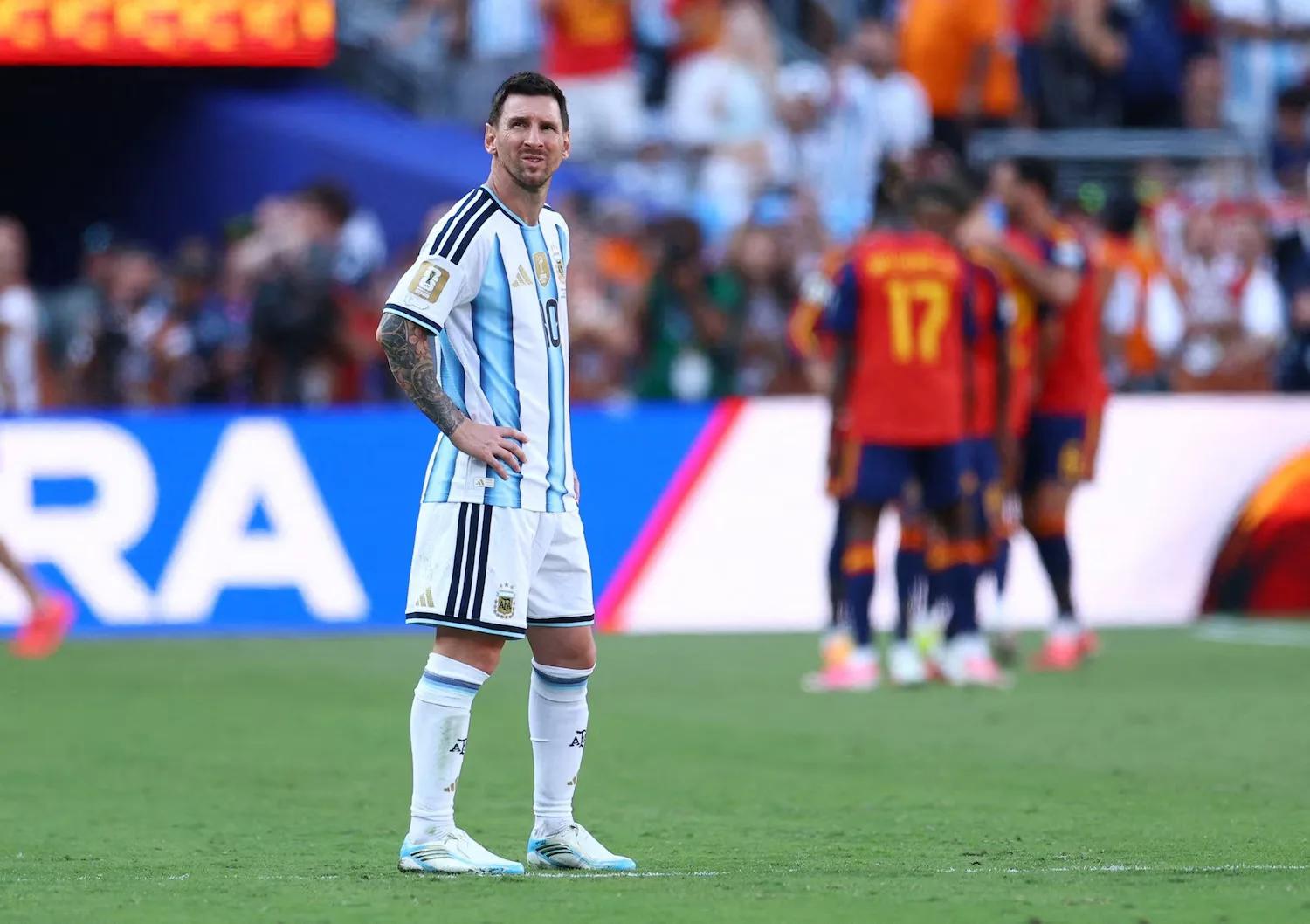
This prevented Messi from dictating play in the way he has throughout his remarkable career.
Instead of creating chances in dangerous areas, he was often forced to receive the ball far from goal.
Spain’s organisation ensured that Argentina’s captain never found the rhythm required to change the game.
Defensive Organisation at Its Best
Spain’s defence wasn’t simply about making tackles.
Their entire defensive structure worked together.
The back line remained compact.
The midfield shielded central areas.
The full-backs recovered quickly whenever Argentina attempted attacks down the wings.
Communication between defenders was excellent throughout the match.
Argentina rarely found clear openings inside the penalty area.
Whenever danger appeared, Spain calmly regained possession and restarted their passing game.
Clinical Attacking Without Taking Unnecessary Risks
Spain didn’t attack recklessly.
Instead, every attack had purpose.
Their players rotated positions intelligently.
Wide players stretched Argentina’s defence.
Midfielders arrived late into dangerous positions.
Full-backs provided width without leaving the defence exposed.
This balance between attack and defence made Spain extremely difficult to stop.
Rather than relying on individual moments, Spain created opportunities through collective movement and intelligent passing combinations.
The Goal That Sealed the Trophy
World Cup finals are often decided by a single decisive moment.
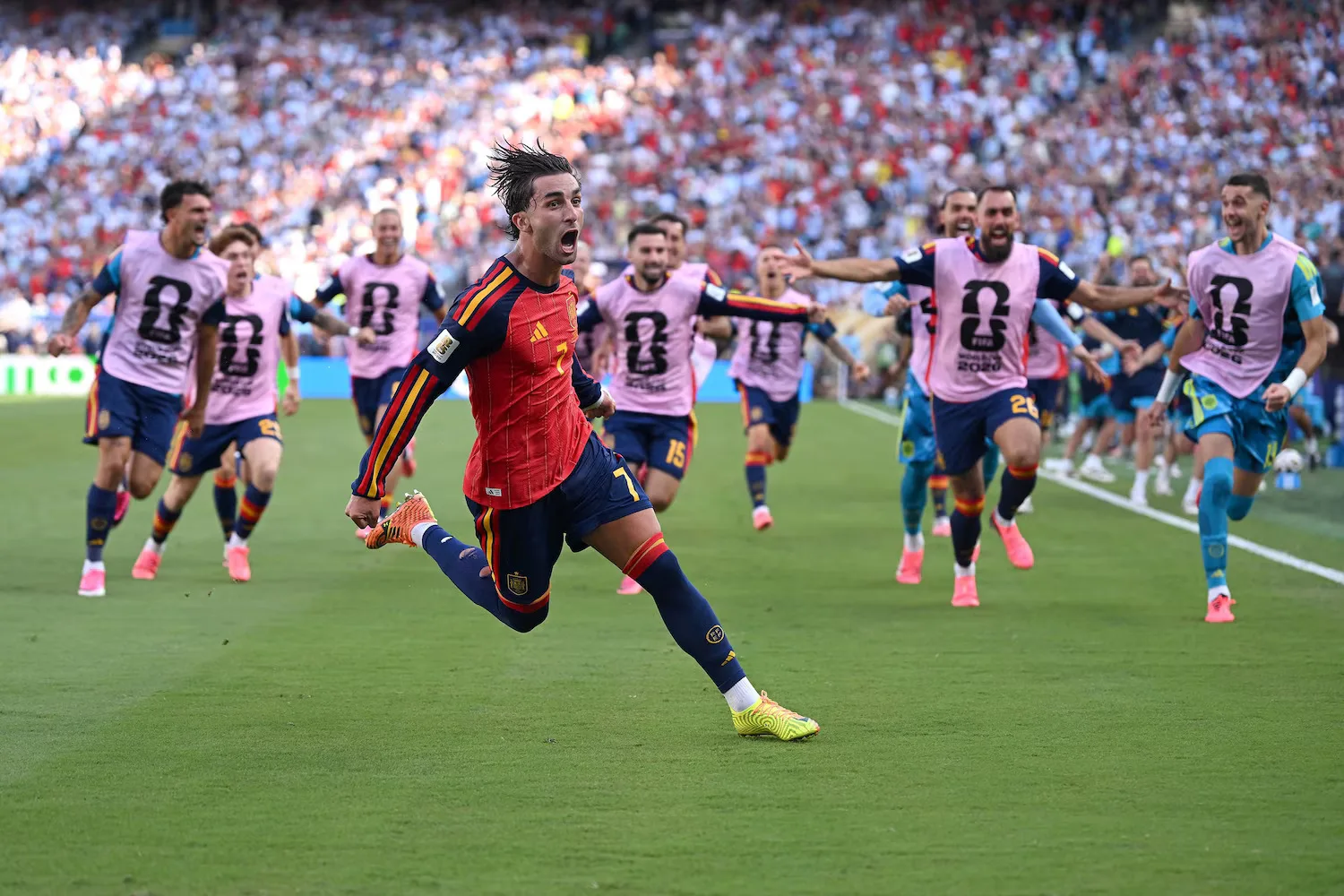
After repeatedly knocking on Argentina’s door, Spain finally found the breakthrough.
The winning goal reflected everything they had done throughout the match:
- Patient build-up
- Intelligent movement
- Quick passing
- Clinical finishing
It was a goal built through teamwork rather than individual brilliance.
The finish rewarded Spain’s persistence and tactical discipline.
Statistical Dominance
While the final score remained close, the underlying statistics highlighted Spain’s superiority.
Spain consistently controlled possession and created the vast majority of meaningful chances during the match. They registered approximately 20 shots, while Argentina struggled to create genuine attacking opportunities.
Other areas where Spain held the advantage included:
- Ball possession
- Completed passes
- Territory
- Successful presses
- Final-third entries
- Chance creation
These numbers reflected what fans witnessed throughout the match—Spain controlled almost every aspect of the game.
Argentina’s Missed Opportunities
Argentina deserve enormous credit for reaching another World Cup final.
Their journey included several impressive performances throughout the tournament.
However, the final exposed several weaknesses.
Spain’s pressing prevented Argentina from building attacks.
The midfield couldn’t retain possession consistently.
Wide players struggled to isolate defenders.
The team rarely created dangerous chances inside Spain’s penalty area.
Against such an organised opponent, every small mistake became costly.
Spain’s Road to the Championship
Winning the World Cup requires consistency over an entire tournament.
Spain demonstrated exactly that.
Throughout the competition, they showed:
- Tactical flexibility
- Defensive discipline
- Squad depth
- Technical excellence
- Excellent fitness levels
- Mental resilience
Every knockout match strengthened their confidence.
By the time they reached the final, Spain looked like the tournament’s most complete team.
A New Generation of Spanish Football
Spain’s success represents more than just another World Cup trophy.
It symbolises the emergence of a talented new generation capable of continuing the nation’s footballing tradition.
Rather than relying on a single superstar, Spain showcased:
- Collective teamwork
- Technical excellence
- Tactical intelligence
- Positional discipline
- Squad unity
Their performance demonstrated how modern football increasingly rewards organised systems over individual brilliance.
What This Means for Argentina
Although the defeat was disappointing, Argentina remain one of world football’s strongest nations.
The tournament highlighted:
- Exceptional squad quality
- Strong mentality
- Competitive depth
However, the final also illustrated the need to adapt against teams capable of dominating possession and pressing aggressively.
Argentina will undoubtedly learn valuable lessons from this experience as they prepare for future international competitions.
Lessons Every Football Coach Can Learn
Spain’s victory provides several tactical lessons for coaches at every level.
1. Team Structure Matters More Than Individual Talent
Even against world-class players, a disciplined tactical system can succeed.
2. Pressing Wins Matches
Winning possession high up the pitch creates valuable attacking opportunities.
3. Midfield Control Is Essential
Dominating midfield often determines the outcome of major finals.
4. Defensive Organisation Starts Up Front
Every player contributes defensively, beginning with the forwards.
5. Patience Creates Opportunities
Spain demonstrated that controlled possession eventually opens defensive gaps.
Final Thoughts
The FIFA World Cup 2026 Final will be remembered as a showcase of tactical excellence.
Spain didn’t simply win—they demonstrated how intelligent football, relentless pressing, technical quality, and collective discipline can overcome even the strongest opponents.
While Argentina entered the match with immense belief and one of football’s greatest icons in Lionel Messi, Spain’s organised approach ensured they remained in control throughout the contest.
This victory may well mark the beginning of another golden era for Spanish football, proving once again that teamwork and tactical discipline remain among the most powerful weapons in the modern game.
Frequently Asked Questions (FAQs)
Who won the FIFA World Cup 2026 Final?
Spain defeated Argentina to win the FIFA World Cup 2026.
Why was Spain so dominant?
Spain controlled possession, pressed aggressively, and limited Argentina’s attacking opportunities through excellent tactical organisation.
Why did Lionel Messi struggle?
Spain collectively closed down space around Messi, restricting his ability to influence the game and create scoring opportunities.
What made Spain’s tactics successful?
Their combination of patient possession, coordinated pressing, compact defending, and intelligent movement made them difficult to break down while creating consistent attacking pressure.
What is the biggest takeaway from the final?
The match demonstrated that tactical discipline, teamwork, and intelligent game management remain decisive factors at the highest level of international football.

Founder of Fashion Design Ideas.