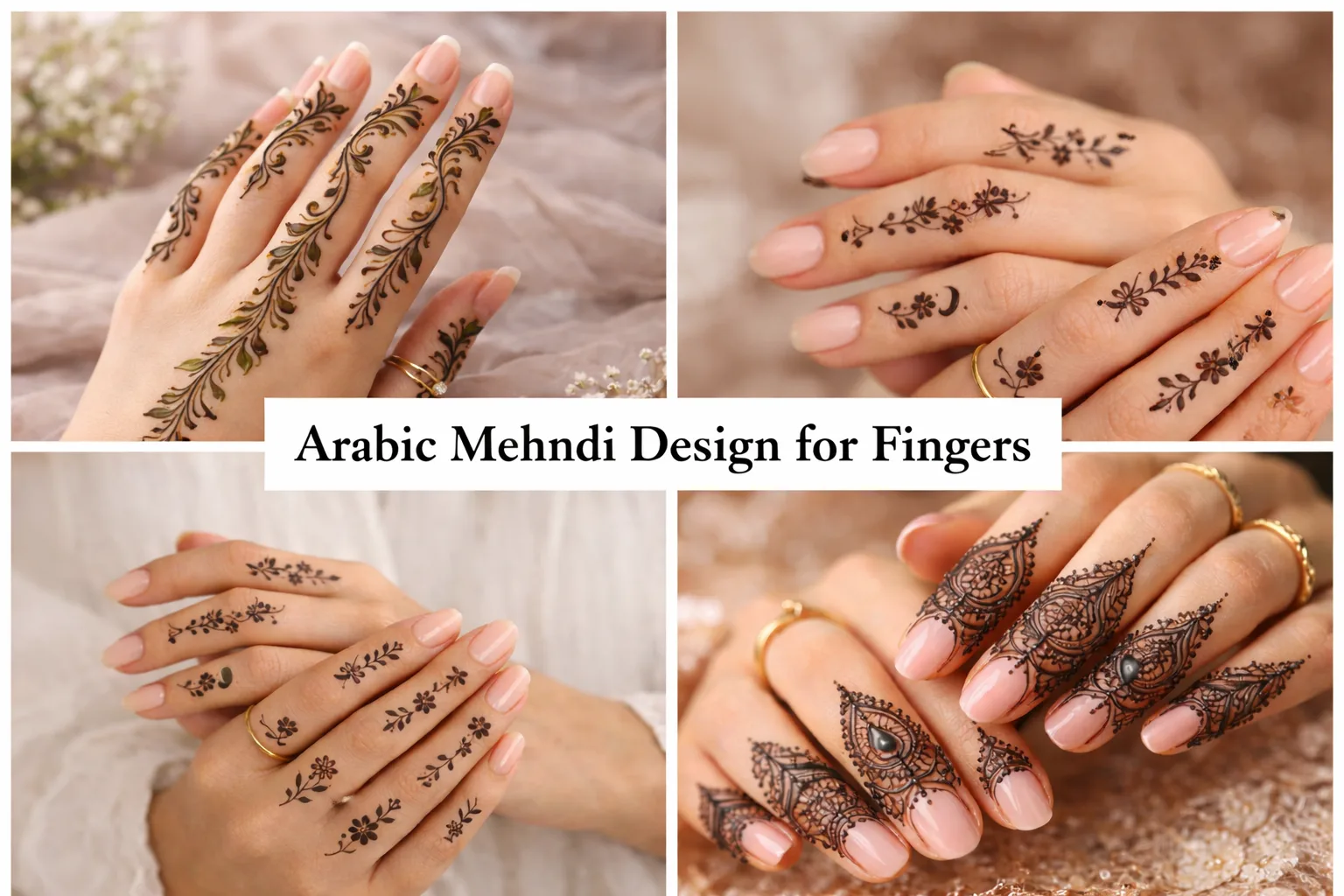
Arabic mehndi simple designs for fingers are elegant, stylish, and easy to apply. These designs focus on bold floral strokes, vines, and minimal patterns that highlight the beauty of fingers without heavy detailing. A well crafted arabic mehndi design can enhance the appearance of your hands while remaining quick to apply and perfect for beginners.
Mehndi has long been an essential part of cultural celebrations and beauty traditions. Among the many styles available today, the arabic mehndi design stands out because of its graceful patterns, flowing motifs, and balanced use of space. Unlike dense traditional designs, Arabic style patterns often leave parts of the skin uncovered, which creates a striking visual contrast. This makes finger mehndi particularly attractive, as the minimal approach highlights the natural elegance of the fingers.
Simple finger mehndi designs are perfect for festivals, casual gatherings, weddings, or even everyday beauty. Many people prefer these designs because they require less time to apply, dry faster, and still look incredibly beautiful. Whether you prefer delicate floral patterns, geometric shapes, or flowing vines, finger mehndi offers endless creative possibilities.
In this detailed guide, you will explore different ideas for arabic mehndi design patterns specifically for fingers, understand their beauty and versatility, and learn how beginners can apply them easily.
Affiliate Disclosure: This article includes affiliate links. If you choose to click on them and make a purchase, I may earn a commission—at no additional cost to you.
Why Arabic Mehndi Designs Are Perfect for Fingers
Arabic style mehndi is widely appreciated because of its balance between simplicity and elegance. When applied on fingers, the design creates a delicate and refined look that enhances the natural shape of the hand.
One of the biggest advantages of an arabic mehndi design is its flowing style. The patterns usually move naturally along the finger, which creates a graceful appearance. Instead of filling every inch with heavy detailing, Arabic patterns focus on bold strokes and defined shapes. This approach allows the design to look sophisticated while remaining minimal.
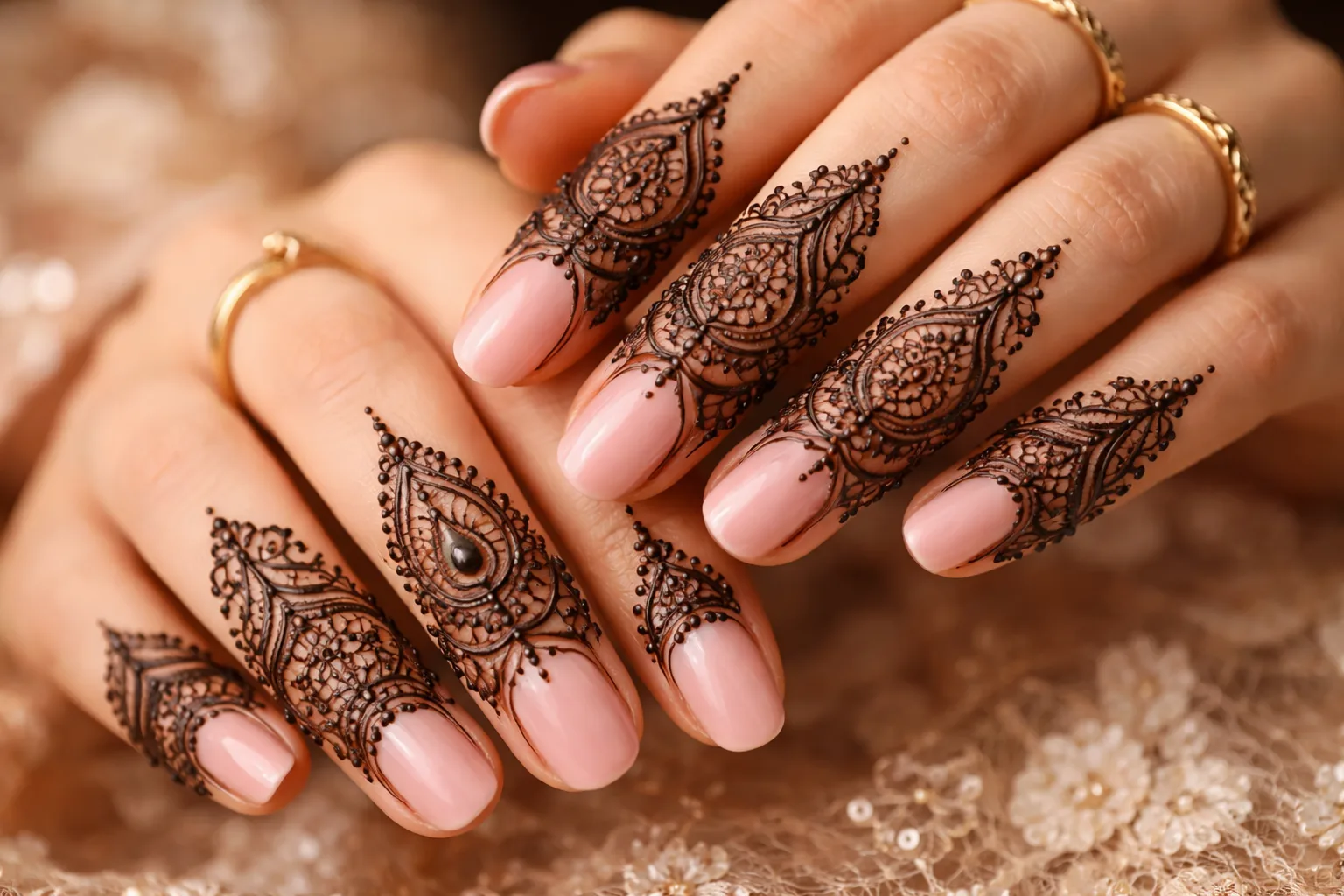
Another reason why finger designs are so popular is convenience. Many people do not always have the time to sit for long mehndi sessions. A simple arabic mehndi design on fingers can be completed quickly, making it an ideal option for busy schedules or last minute events.
Finger mehndi also allows creative flexibility. Some individuals prefer decorating only one finger with a statement pattern, while others like subtle designs across all fingers. Because Arabic mehndi uses negative space effectively, the result looks clean and modern.
Overall, Arabic finger mehndi designs are perfect for anyone who wants a stylish yet effortless look.
Minimalist Floral Patterns for Elegant Fingers
Floral motifs are one of the most recognizable elements of an arabic mehndi design. Even the simplest flower can transform a finger into a beautiful piece of art.
Minimalist floral patterns usually involve a single flower placed near the base of the finger or at the middle joint. The petals are drawn with bold strokes, and small leaves or dots are added around the flower to enhance the design. Because the pattern remains small and focused, it looks delicate without appearing overly complicated.
Another popular variation involves a tiny floral vine that travels along the side of the finger. This design gently follows the natural curve of the finger, creating a graceful and feminine look. The vine may include small leaves, curved stems, and miniature flowers that are spaced evenly.
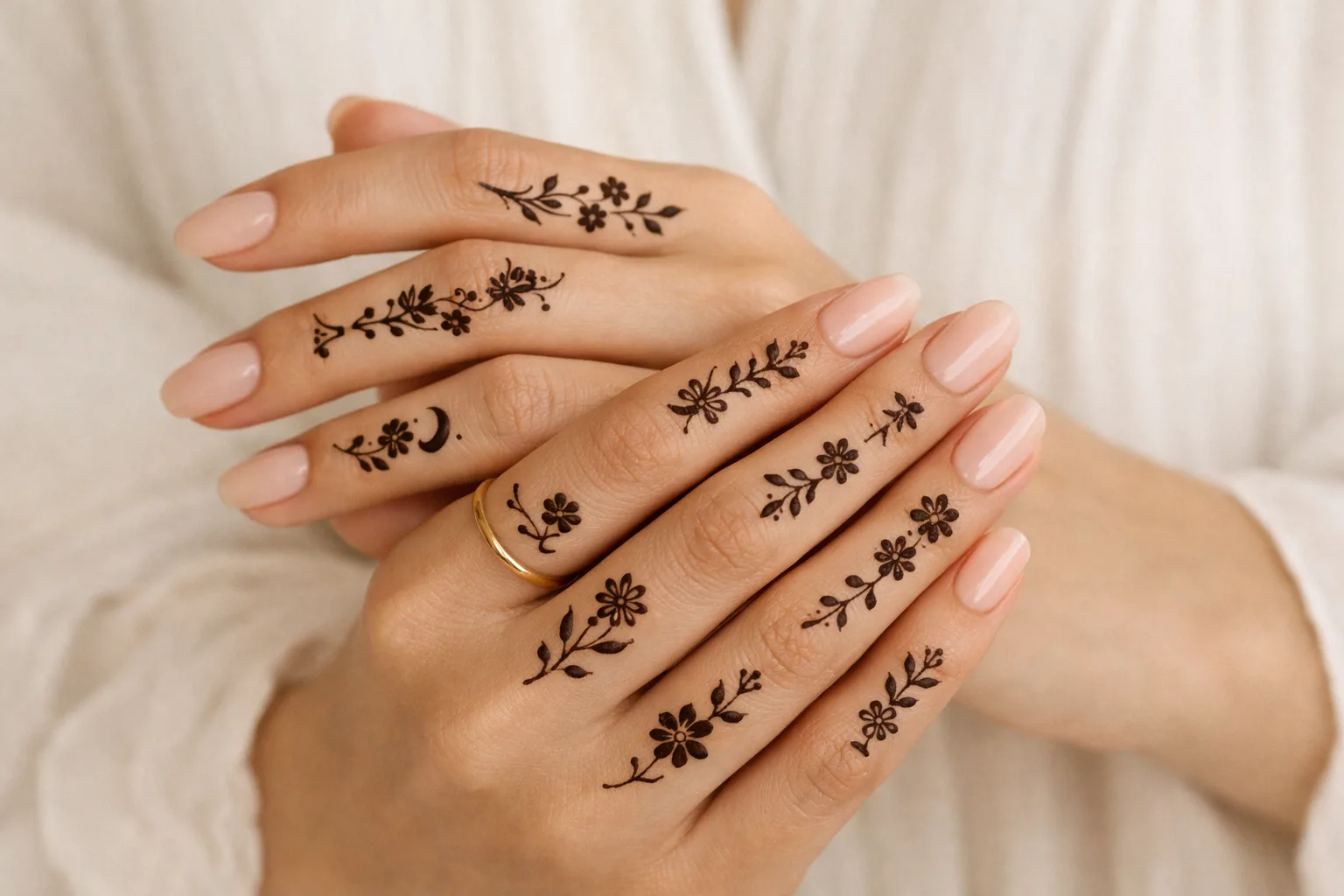
The beauty of floral Arabic patterns lies in their versatility. They can be extremely simple or slightly detailed depending on personal preference. Even beginners can create a beautiful arabic mehndi design using basic floral elements.
Floral finger mehndi designs are especially popular for festive occasions because they symbolize beauty, celebration, and elegance.
Geometric Shapes and Lines for Modern Mehndi
While floral patterns dominate Arabic mehndi, geometric shapes also play an important role in creating stylish finger designs. These patterns offer a modern and edgy appearance while still maintaining the elegance of traditional mehndi.
Geometric finger mehndi often includes simple lines, small circles, and symmetrical patterns. One common idea is to create thin bands around the finger that resemble rings. These bands may include dots, triangles, or tiny leaf shapes to add visual interest.
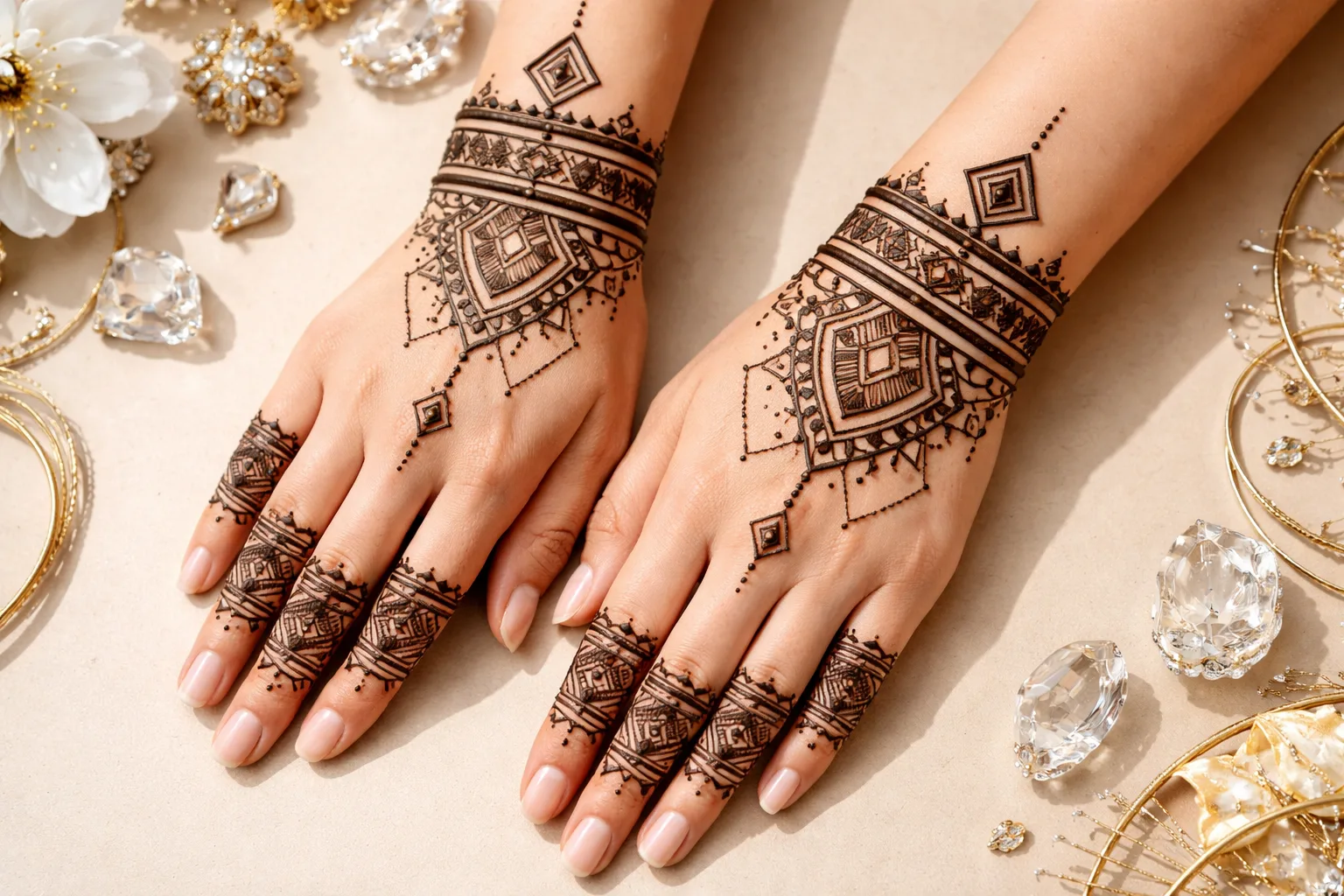
Another stylish option is placing a small geometric motif on the fingertip. This could be a circle surrounded by dots, a diamond shape, or a simple grid pattern. Because the design is compact, it looks neat and contemporary.
Straight lines are also frequently used in an arabic mehndi design. A line running down the center of the finger with small side details can create a very sophisticated look. The simplicity of this pattern makes it perfect for beginners who want to practice neat strokes.
Geometric finger mehndi designs are ideal for people who prefer modern aesthetics while still embracing traditional henna art.
Single Finger Mehndi Designs for a Minimal Look
Sometimes, the most beautiful mehndi designs are the simplest ones. A single finger design can create a bold statement without covering the entire hand.
Many people choose the index finger or ring finger for a focal design. These fingers naturally draw attention, making them perfect for showcasing a creative arabic mehndi design. The design may start from the fingertip and extend slightly downward, or it may begin at the base and move upward.
Single finger patterns often include floral motifs, curved vines, or decorative bands. Because only one finger is decorated, the design becomes the centerpiece of the hand. This approach works especially well for people who prefer subtle elegance.
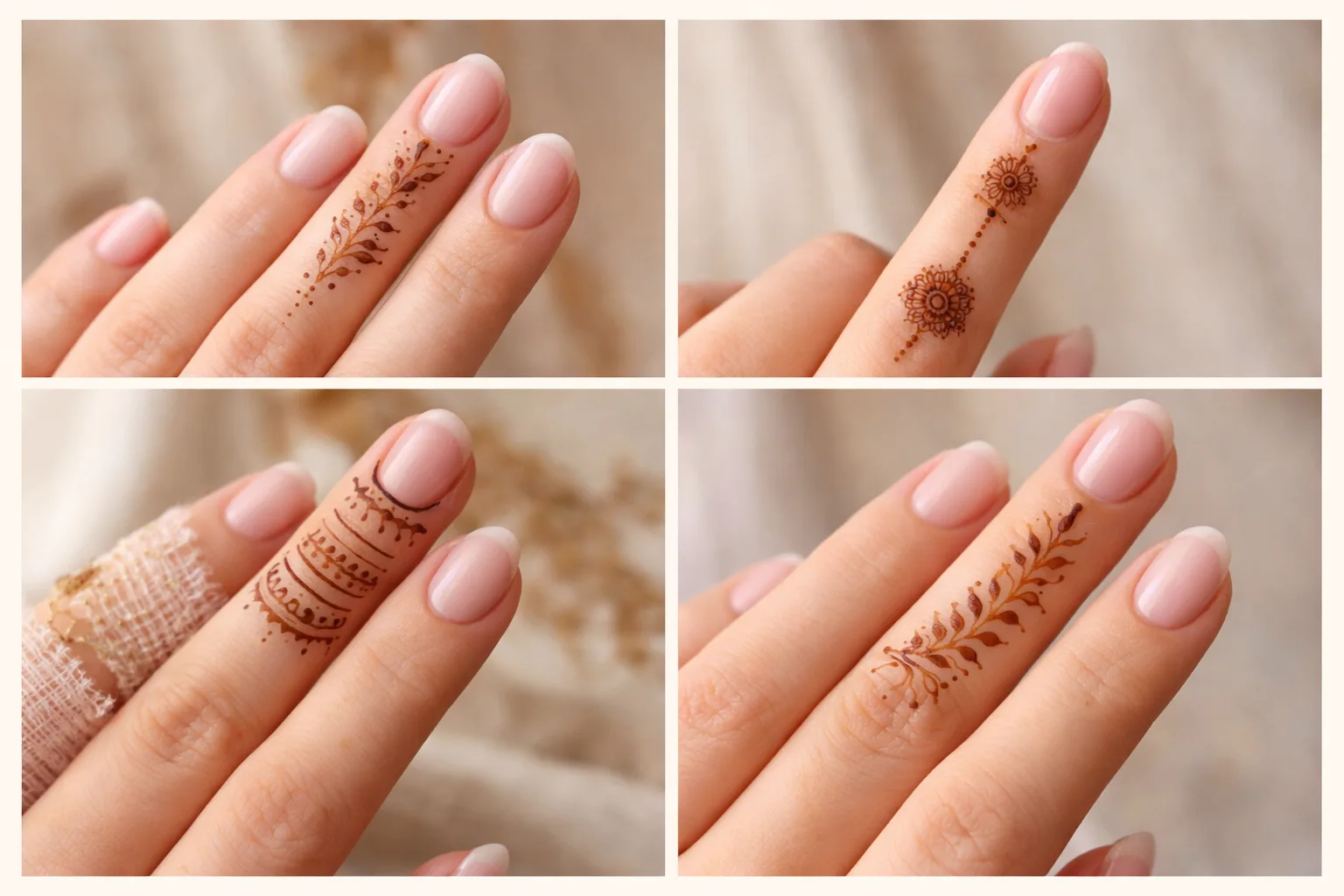
Another benefit of single finger mehndi is convenience. The application process is quick, and the design dries faster than full hand mehndi. This makes it an excellent choice for casual events or last minute celebrations.
Despite its simplicity, a well crafted arabic mehndi design on a single finger can look incredibly stylish and sophisticated.
Fingertip Mehndi Designs That Stand Out
Fingertip mehndi designs are a unique variation of finger henna art. Instead of covering the entire finger, the design focuses mainly on the fingertip area.
One of the most popular styles involves filling the fingertip with henna to create a stained effect. This bold color draws attention and contrasts beautifully with the natural skin tone. The stained tip can also be combined with small dots or delicate lines below the fingertip to enhance the design.
Another creative option is placing a small circular motif directly on the fingertip. The circle may include tiny petal shapes, dots, or simple shading to create a decorative look.
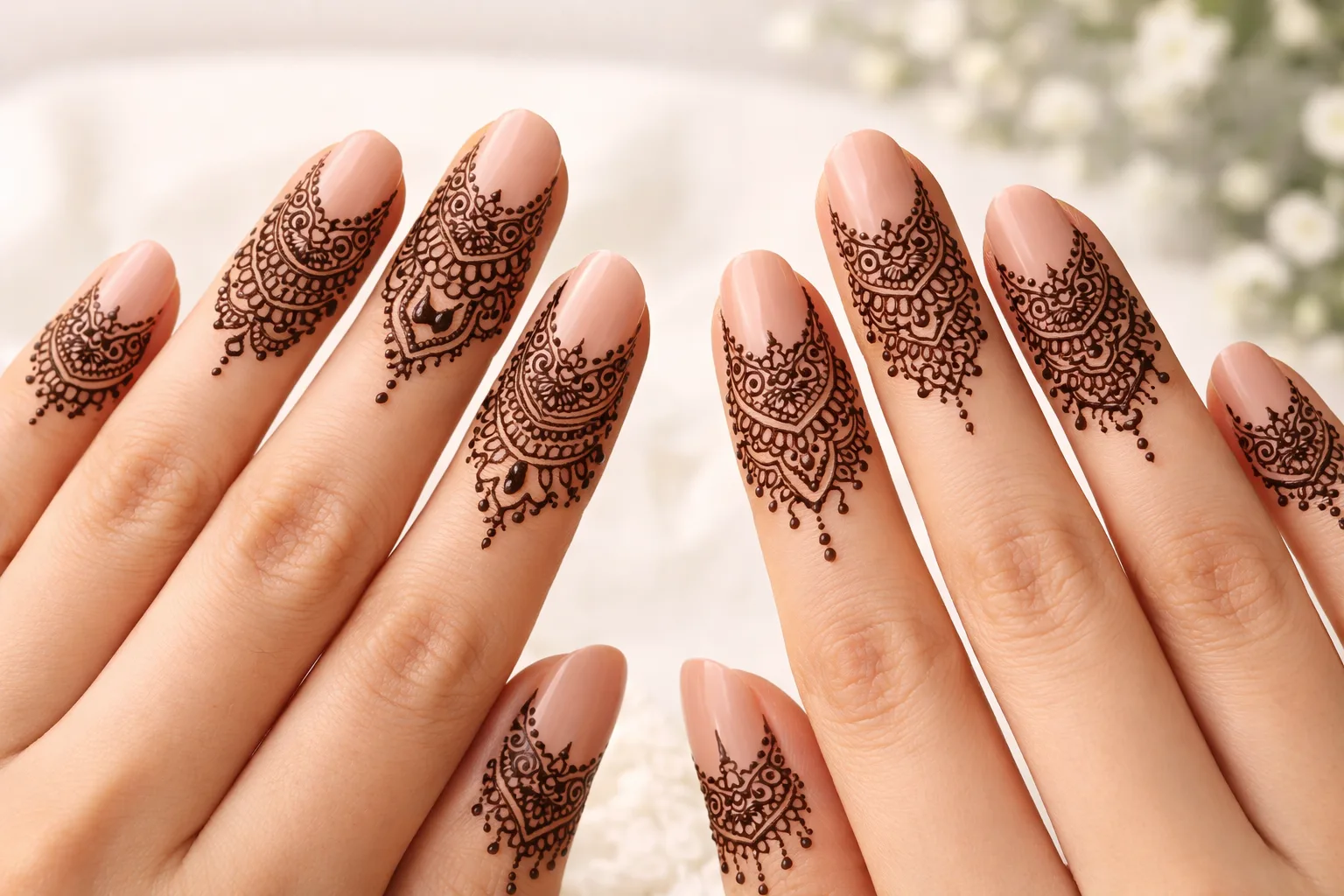
Fingertip designs are particularly practical because they require very little time to apply. Even beginners can easily create a stylish arabic mehndi design by focusing only on the tips.
This type of design is perfect for people who want a minimal yet eye catching mehndi style.
Vine and Leaf Motifs for Flowing Finger Designs
Vine and leaf patterns are among the most graceful elements of Arabic mehndi. These motifs create a flowing movement that naturally complements the shape of the fingers.
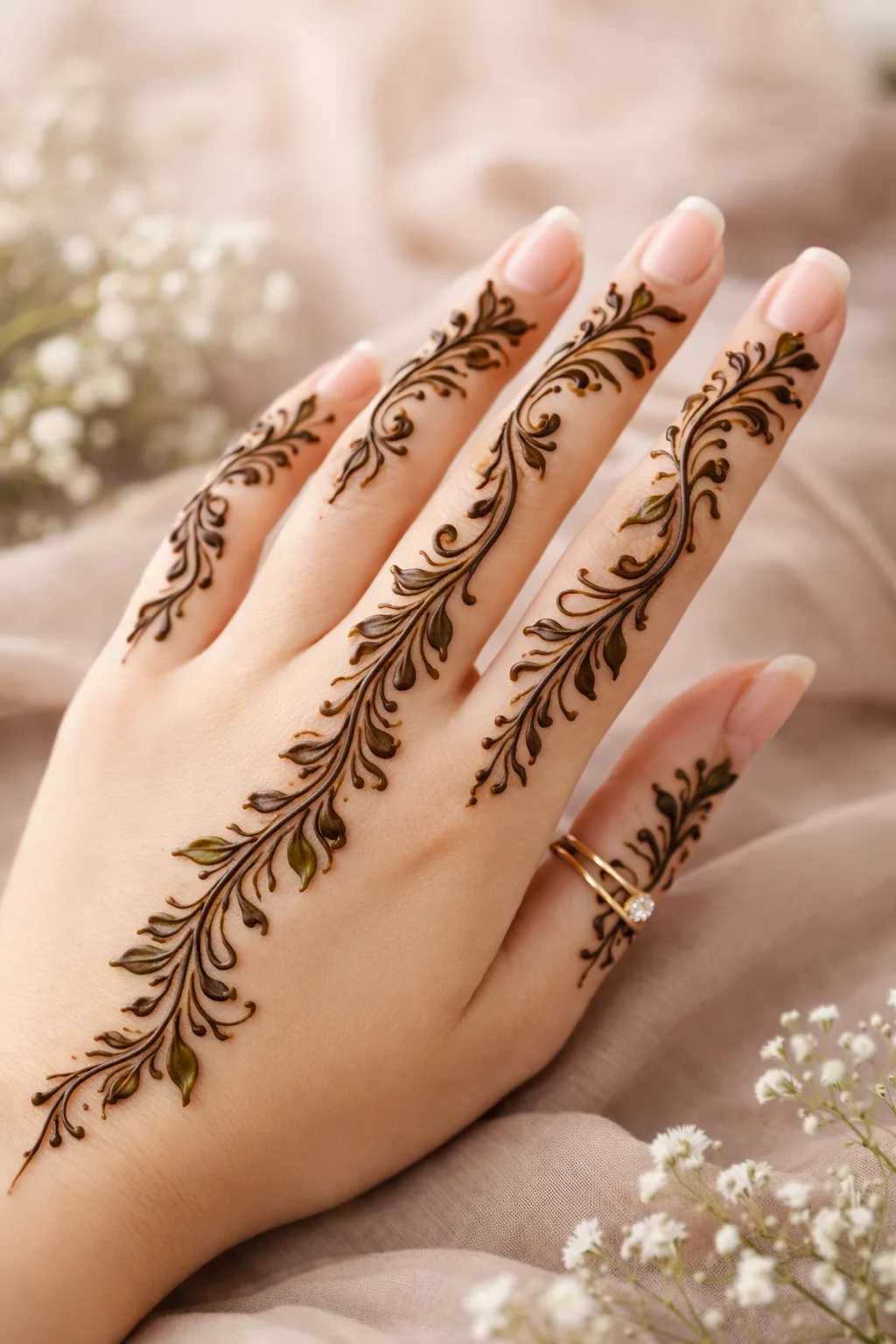
A typical vine design begins near the base of the finger and travels upward in a curved path. Along the vine, small leaves and dots are added to create texture and detail. The gentle curve of the pattern gives the finger a slender and elegant appearance.
Sometimes the vine pattern extends from a larger mehndi design on the back of the hand. In other cases, it stands alone as a simple finger decoration. Either way, the design maintains a beautiful sense of movement and balance.
Leaf motifs can also be arranged in small clusters along the finger. These clusters create a soft decorative effect that feels both traditional and modern.
The flowing nature of vine patterns makes them one of the most loved styles in arabic mehndi design.
How to Apply Arabic Mehndi for Beginners
Applying Arabic mehndi can be a beautiful and rewarding art form, and beginners can learn it easily with a little patience and practice. The first step is gathering the necessary materials before starting the design process.
A henna cone is essential for drawing the patterns. Tissue paper helps keep the area clean, while cotton balls are useful for applying aftercare solutions. Many artists also prepare a mixture of lemon juice and sugar, which helps darken the mehndi stain after the design dries.
Before applying the design, it is important to prepare your hands properly. Wash your hands thoroughly with soap and water to remove any oils or dirt from the skin. Clean skin allows the mehndi to stain more effectively, resulting in a darker color.
Beginners should start with a simple arabic mehndi design. Floral patterns, vines, and basic shapes are excellent choices for practice. Looking at reference images or tutorials can provide inspiration and guidance.
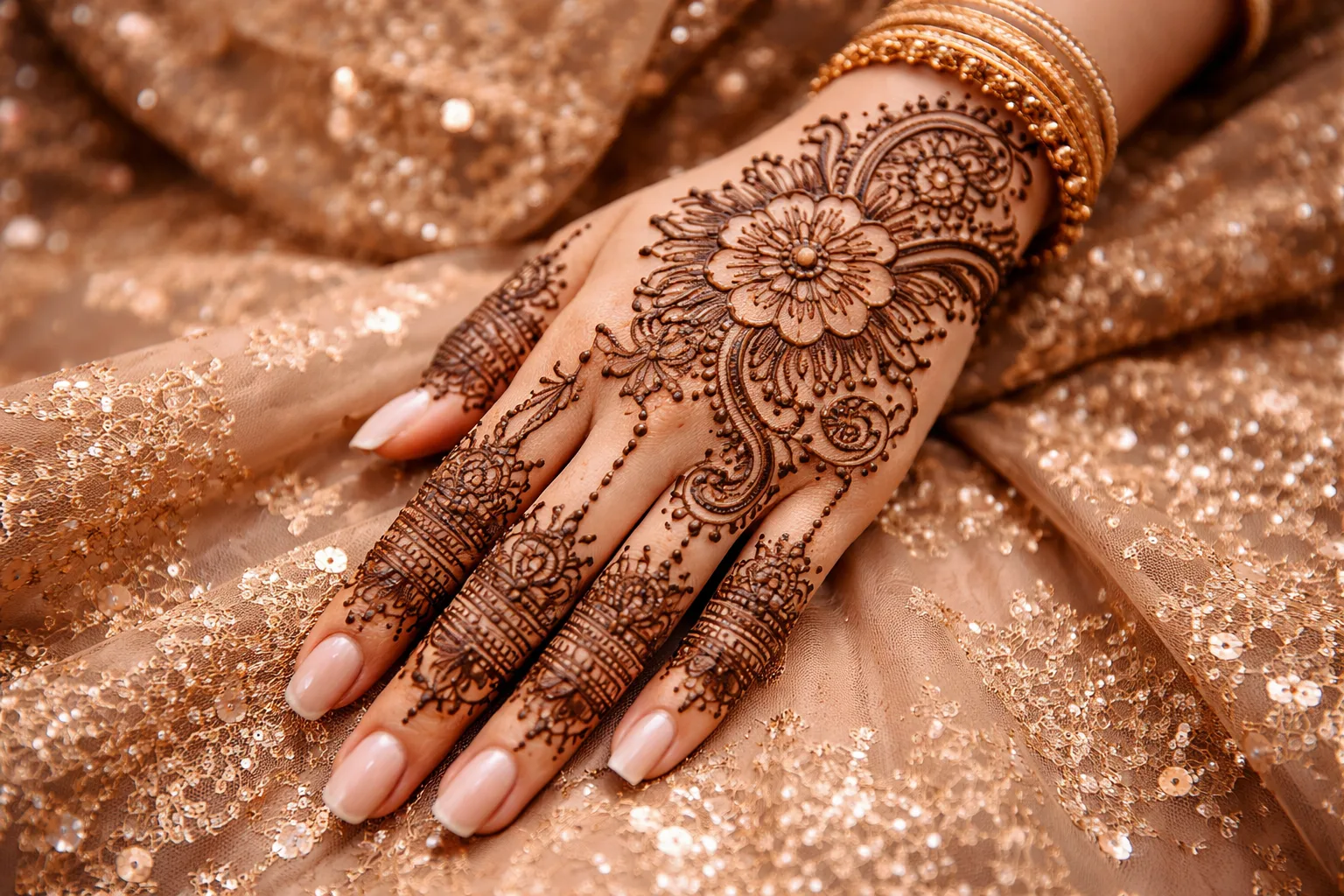
When applying the mehndi, hold the cone like a pen and apply gentle pressure to create smooth lines. Begin with the basic outlines of the design, such as flowers, leaves, or curved vines. It is perfectly normal for beginners to make small mistakes, and practice will gradually improve control and precision.
Once you complete the outlines, you can add additional details to enhance the design. You can use dots, swirls, and small shading elements to make the pattern appear more intricate and beautiful.
After finishing the design, you should allow the mehndi to dry completely. Ideally, you should keep it on the skin for four to six hours or even longer. The longer you keep the paste on the skin, the darker the stain will become.
When the mehndi dries, you can gently dab a mixture of lemon juice and sugar onto the design using a cotton ball. This step helps keep the paste moist and encourages a deeper stain.
Finally, you should gently scrape off the dried mehndi instead of washing it away with water. If you avoid water for several hours, the color will develop fully. Over time, the stain will deepen and reveal the rich reddish-brown shade that makes mehndi so beautiful.
With consistent practice, beginners can gradually master the art of creating elegant Arabic mehndi design patterns.
Check out Arabic Mehndi Stencil Designs on Amazon
Conclusion
Arabic mehndi simple designs for fingers are a perfect combination of beauty, elegance, and simplicity. These designs highlight the natural shape of the fingers while maintaining a graceful and stylish appearance. From delicate floral motifs and flowing vines to modern geometric patterns, the possibilities are endless.
The appeal of an arabic mehndi design lies in its minimal yet impactful style. Unlike heavily detailed patterns, Arabic mehndi allows the skin to breathe through open spaces, which enhances the visual charm of the design. This makes finger mehndi especially attractive and easy to wear for various occasions.
Whether you are preparing for a festival, a wedding celebration, or simply experimenting with creative body art, simple finger mehndi designs provide a wonderful starting point. Even beginners can learn the technique with practice and patience.
With the right inspiration and basic skills, anyone can create beautiful finger mehndi patterns that look elegant and timeless.
Frequently Asked Questions
What is an Arabic mehndi design
An Arabic mehndi design features bold floral patterns, flowing vines, and minimal detailing, creating an elegant and modern appearance.
Are Arabic mehndi designs suitable for beginners
Yes, People often recommend Arabic mehndi for beginners because the patterns are simpler and rely on bold outlines rather than dense detailing.
How long should mehndi stay on the fingers
Mehndi should ideally remain on the skin for four to six hours or longer to achieve a darker and richer stain.
Why are finger mehndi designs popular
Finger mehndi designs are popular because they are quick to apply, dry faster, and still look stylish and elegant.
How can I make my mehndi stain darker
Applying a lemon and sugar mixture after the mehndi dries and avoiding water for several hours can help deepen the color of the stain.

Founder of Fashion Design Ideas.