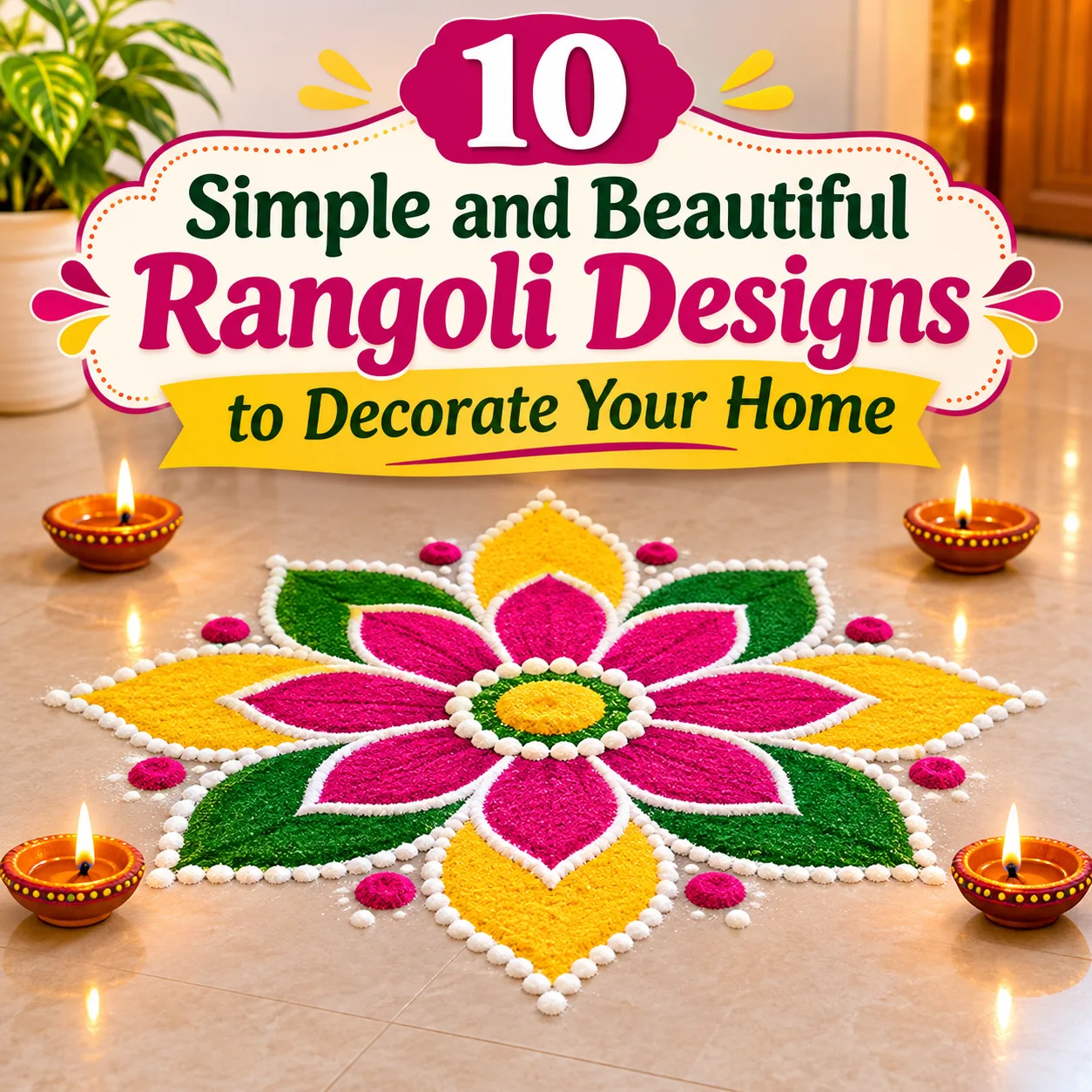
Rangoli is one of the most beautiful ways to welcome positivity, happiness, and good fortune into a home. Whether it is a festive celebration, a special occasion, or an ordinary day, a colourful rangoli at the entrance can instantly make your home look more inviting. From traditional floral patterns to modern geometric designs, there are countless ways to create beautiful rangoli artwork using simple materials and creative ideas.
In Indian homes, rangoli holds a special cultural and traditional significance. It is commonly created during festivals such as Diwali, Onam, Pongal, Vishu, and other auspicious occasions. However, you don’t need to wait for a festival to decorate your home with rangoli. Simple designs made with coloured powders, flower petals, rice flour, or even chalk can add charm to your entrance, courtyard, staircase, and living room.
If you are looking for easy yet attractive rangoli ideas, you are in the right place. Here are 10 simple and beautiful rangoli designs to decorate your home. These designs are suitable for beginners as well as people who love experimenting with different rangoli patterns.
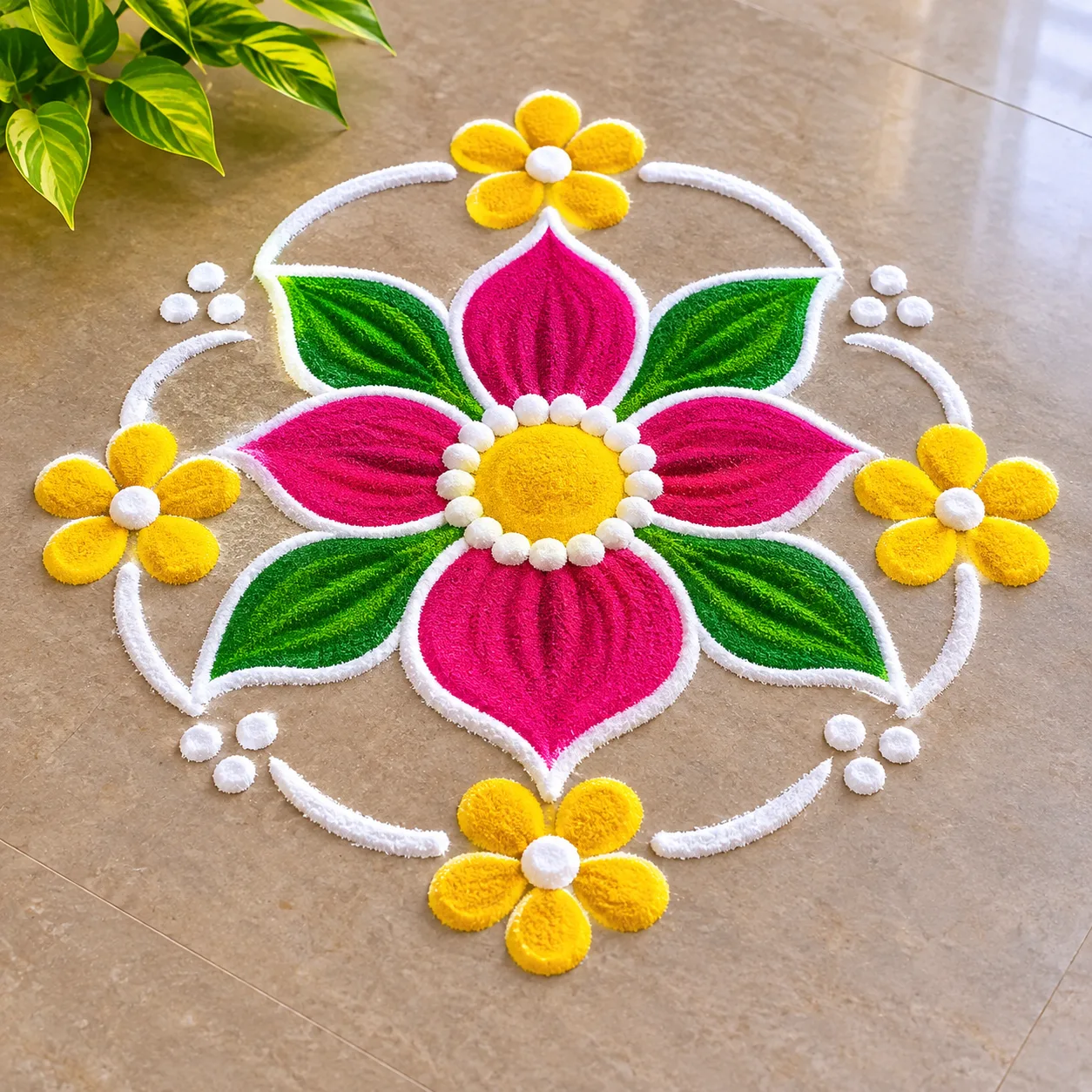
1. Simple Floral Rangoli Design
Floral rangoli designs are among the most popular choices for home decoration. Their natural beauty, colourful appearance, and traditional appeal make them suitable for almost every occasion. You can create a simple flower-inspired rangoli using coloured powders in shades of pink, yellow, orange, purple, and green.
Start by drawing a small circle in the centre and surround it with petal-shaped patterns. Add another layer of petals using a contrasting colour to make the design look fuller. You can also decorate the outer edges with small dots, leaves, and curved lines.
For a more natural appearance, use fresh flower petals instead of coloured powders. Marigold, rose, and chrysanthemum petals work particularly well. A combination of yellow and orange marigold petals with red rose petals creates a beautiful traditional look.
This design is perfect for decorating the main entrance, prayer room, or courtyard. It is especially suitable for Diwali, Onam, Vishu, and other festive celebrations.
2. Peacock Rangoli Design
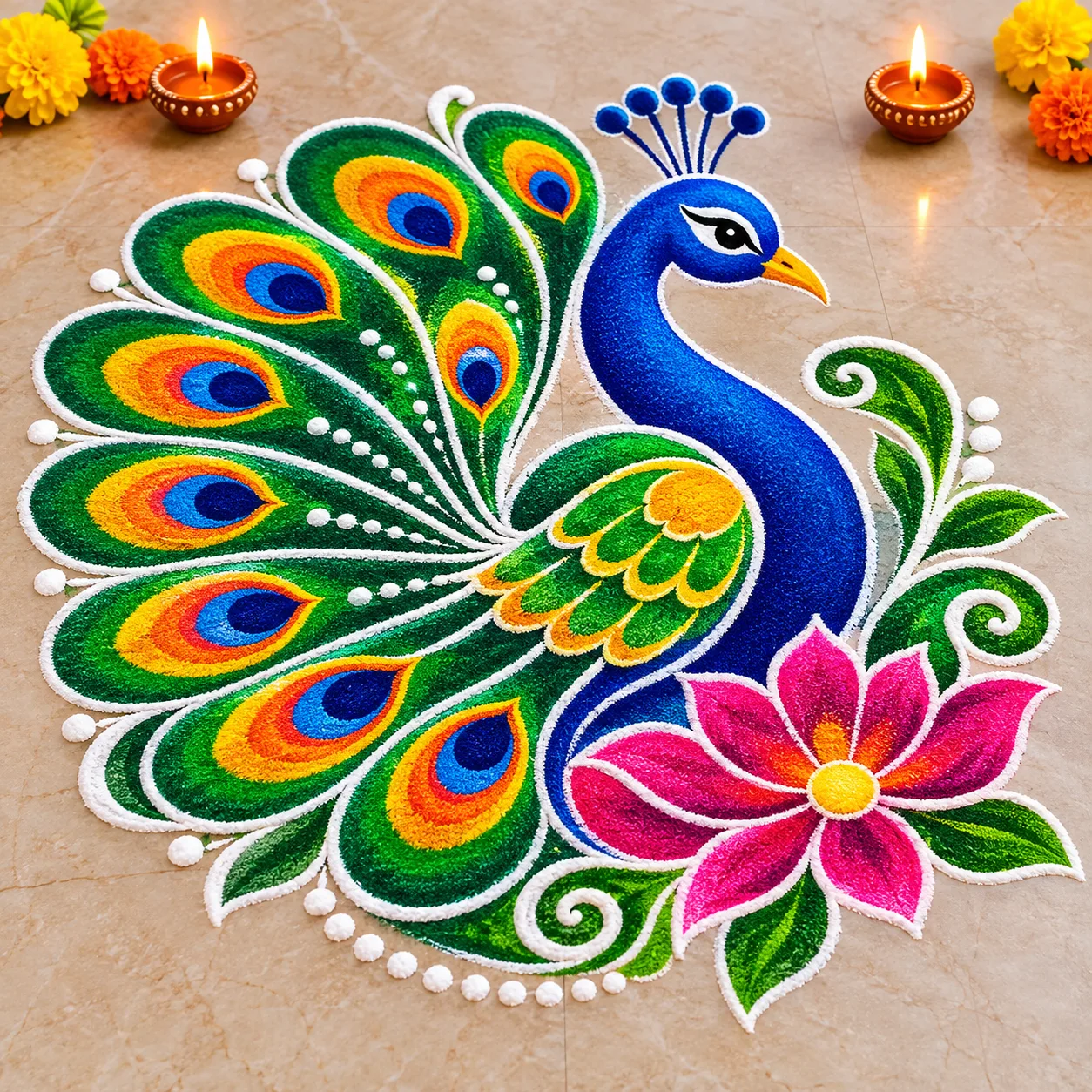
A peacock is a symbol of beauty, elegance, and grace. Its colourful feathers make it an excellent inspiration for attractive rangoli artwork. Although detailed peacock rangoli designs can look complicated, you can create a simple version using basic shapes and a few bright colours.
Begin by drawing the outline of a peacock with a curved neck and a small head. Create a fan-shaped tail behind the body and divide it into several sections. Fill these sections with vibrant shades of blue, green, purple, yellow, and turquoise. Add small feather patterns to make the tail more attractive.
You can decorate the surrounding area with tiny flowers, dots, and leaf patterns. Using white rangoli powder to create the outline will help the colours stand out.
A peacock rangoli looks beautiful at the entrance of your home or in an open courtyard. It is also an excellent choice for festive occasions and traditional celebrations.
3. Easy Circular Rangoli Design
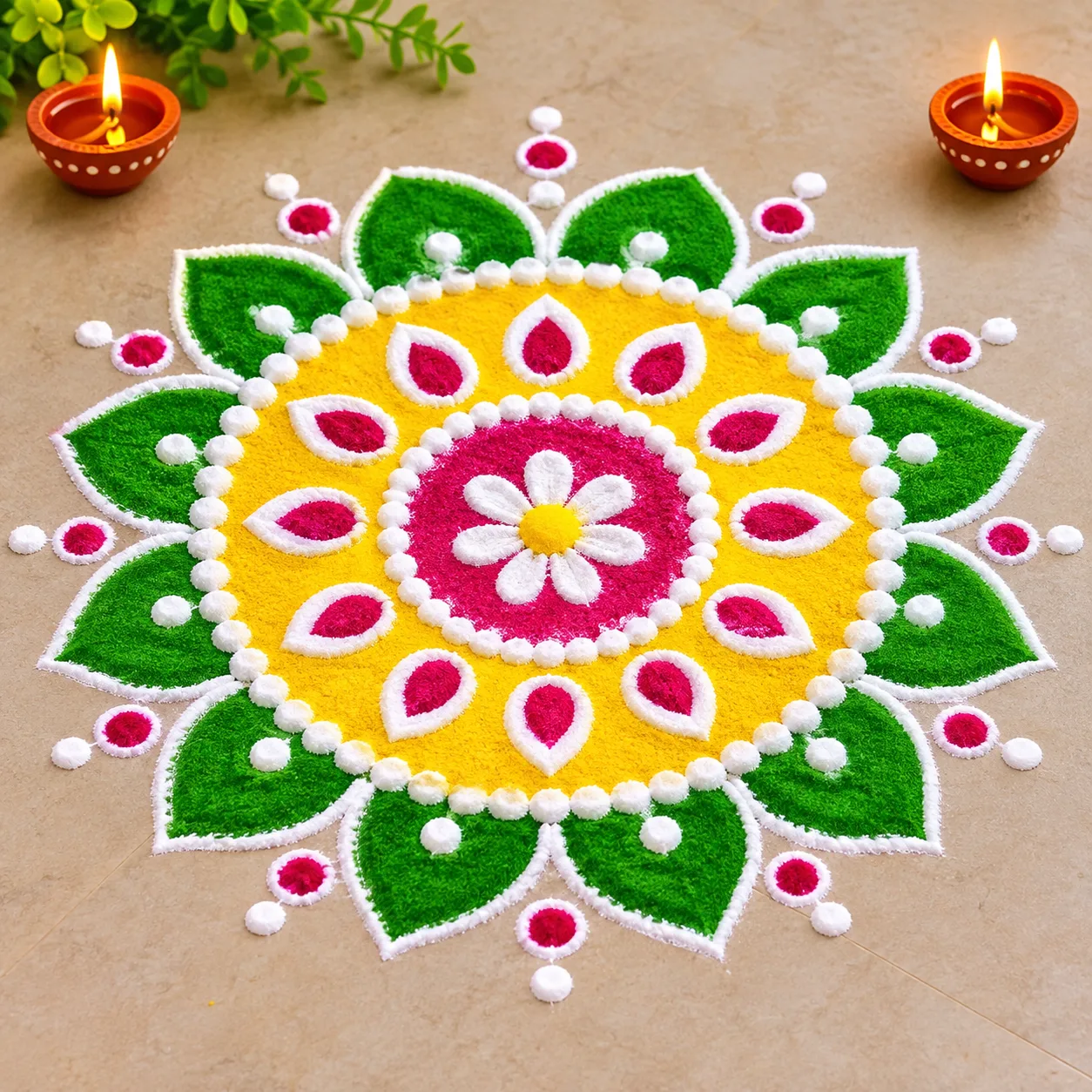
Circular rangoli designs are ideal for beginners because they are easy to draw and can be customised in different ways. Their symmetrical appearance creates a neat and attractive decoration without requiring complicated artistic skills.
To make this design, draw a small circle in the centre and create several circular layers around it. Fill each layer with different colours, such as red, yellow, green, blue, and pink. You can add small petals, triangles, dots, and curved lines between the circles to make the design more interesting.
For an elegant appearance, choose three or four complementary colours instead of using too many shades. A combination of purple, pink, and white creates a soft and beautiful look, while yellow, orange, and red give the rangoli a traditional festive appearance.
Circular rangoli designs are suitable for front doors, living rooms, balconies, and courtyards. You can also place a small decorative lamp in the centre to enhance the overall look.
4. Lotus Rangoli Design
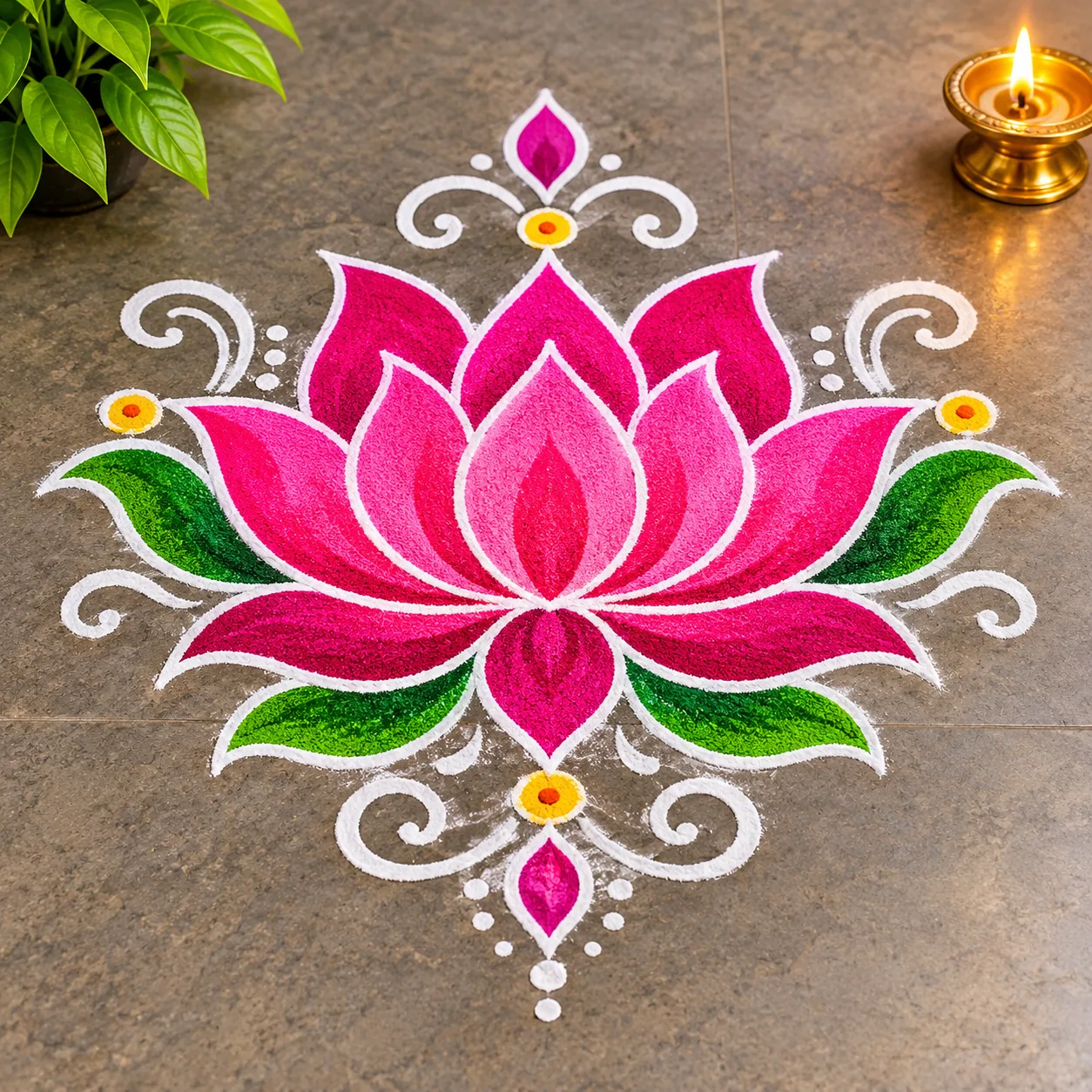
The lotus is one of the most admired flowers in Indian culture. It represents purity, beauty, and spiritual growth. Because of its elegant shape, lotus-inspired rangoli designs are perfect for decorating homes during religious festivals and special occasions.
To create a simple lotus rangoli, start with a small circle in the middle. Draw several pointed petals around the circle, making sure they are evenly spaced. Add another layer of larger petals around the first one to create a fuller flower.
Use pink and red for the petals, yellow for the centre, and green for the surrounding leaves. You can also use white powder to create decorative borders around the petals.
If you prefer a more traditional appearance, create the lotus using white rice flour on a dark floor. For a colourful festive design, use bright rangoli powders and add small diyas around the edges.
A lotus rangoli looks particularly beautiful in front of a prayer room, near the main entrance, or in the centre of a courtyard.
5. Traditional Dot Rangoli Design
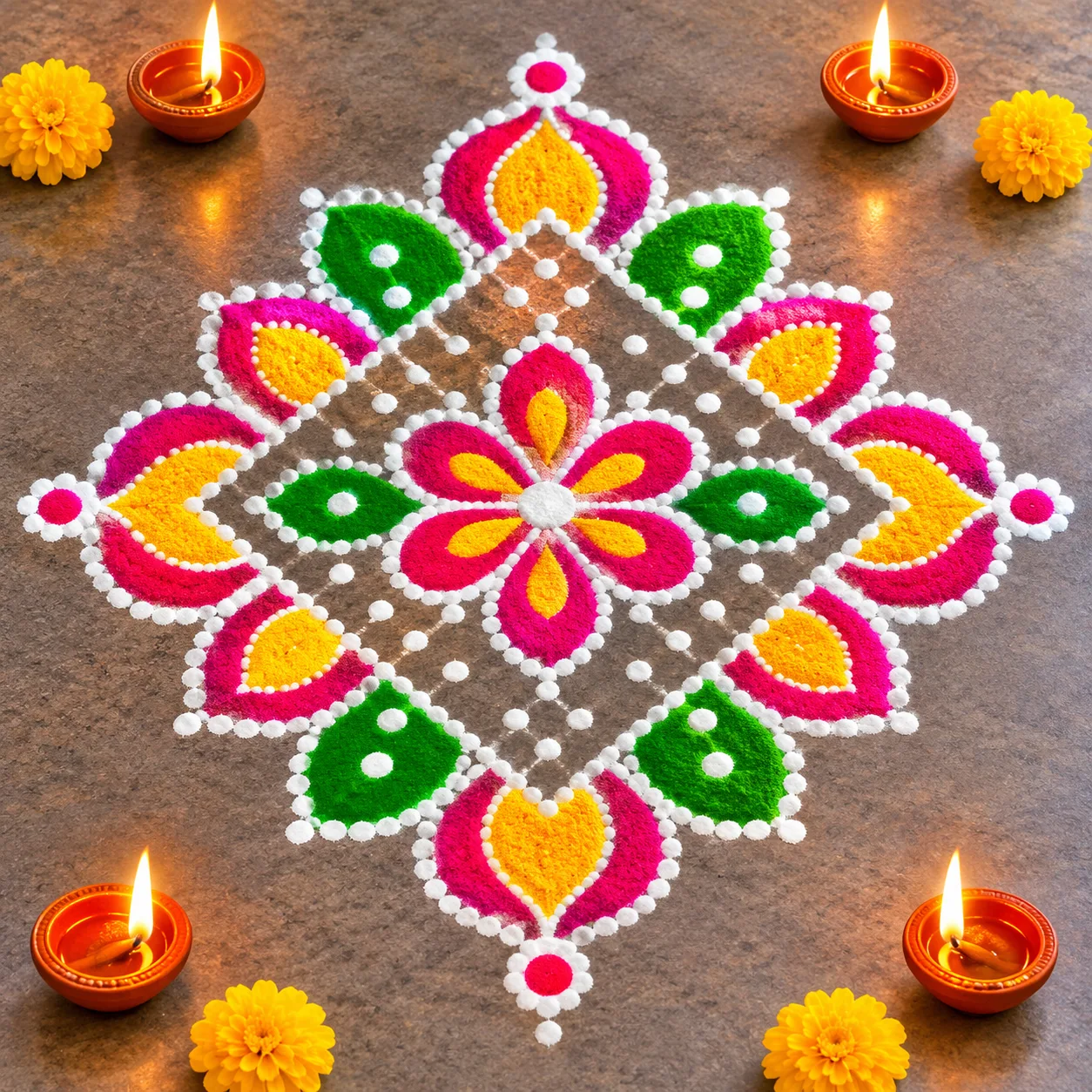
Dot rangoli, also known as pulli kolam in South India, is a traditional form of floor decoration created using carefully arranged dots and connecting lines. It is especially popular in Tamil Nadu, Kerala, Karnataka, and other parts of South India.
This design is a wonderful choice for people who appreciate traditional artwork. Begin by arranging small dots in a symmetrical pattern. You can start with a simple arrangement of five dots in the centre and gradually increase the number of dots in each row.
Once the dots are arranged, connect them using curved lines, loops, and simple geometric shapes. You can leave the design in white rice flour for a traditional look or fill selected areas with colourful powders.
Common patterns include flowers, diamonds, stars, leaves, and symmetrical curves. You can also create more elaborate designs by increasing the number of dots.
Dot rangoli is perfect for daily home decoration, especially near the front entrance. It is also an excellent way to keep traditional Indian art alive.
6. Diya Rangoli Design
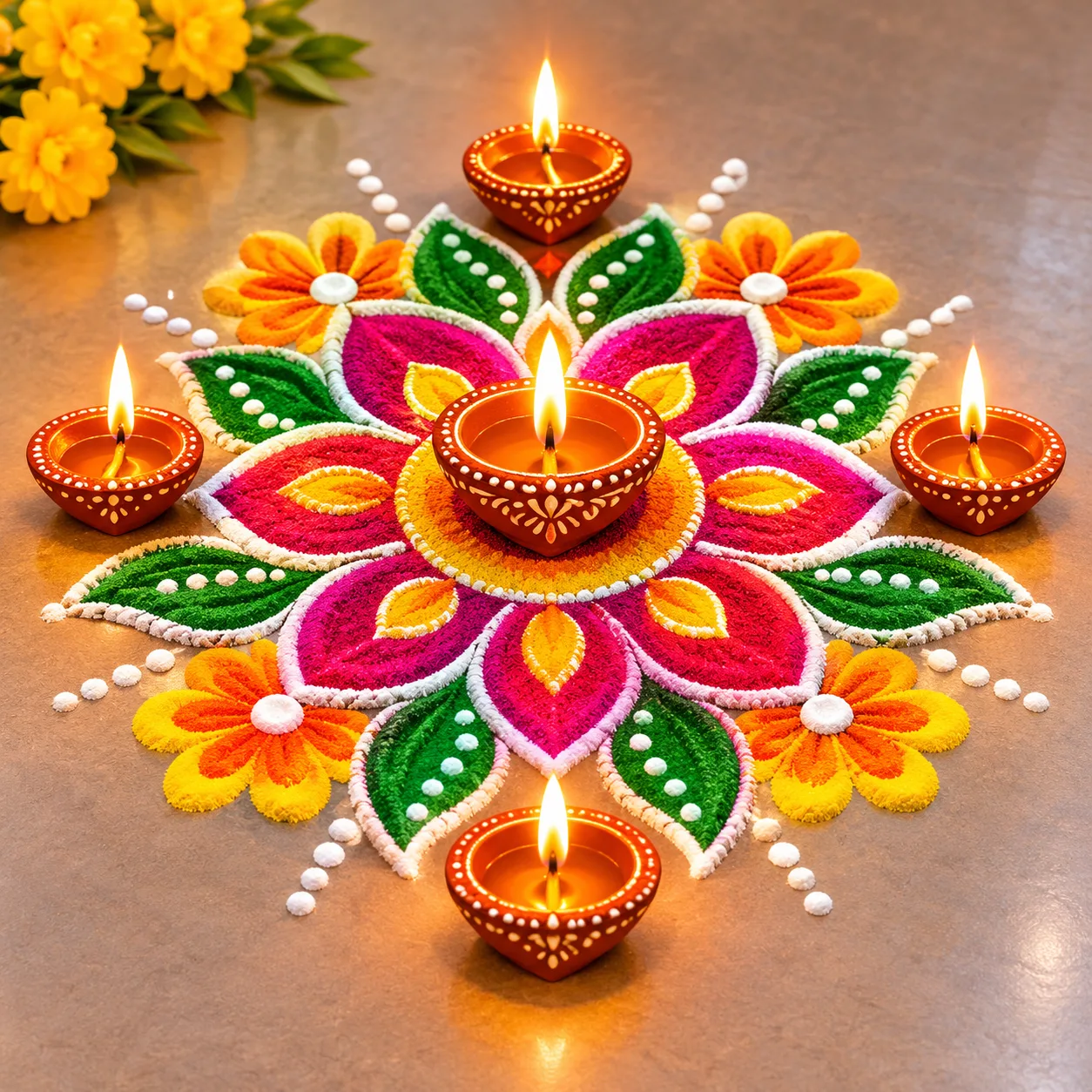
A diya-inspired rangoli is a beautiful choice for creating a warm and festive atmosphere at home. Since diyas are associated with light, happiness, and prosperity, this design is especially popular during Diwali and other religious celebrations.
To create this rangoli, draw a large diya shape in the centre. Add a decorative flame above it using yellow, orange, and red colours. You can create small flower patterns, leaves, and curved lines around the diya to complete the design.
Another idea is to arrange several small diya shapes in a circular pattern. Use contrasting colours such as blue, pink, purple, yellow, and orange to make each diya stand out.
You can also place real earthen diyas around the rangoli for a beautiful combination of light and colour. However, make sure there is enough space between the flames and any loose decorative materials.
This design looks wonderful at the main entrance, near the prayer room, or in the courtyard during festive celebrations.
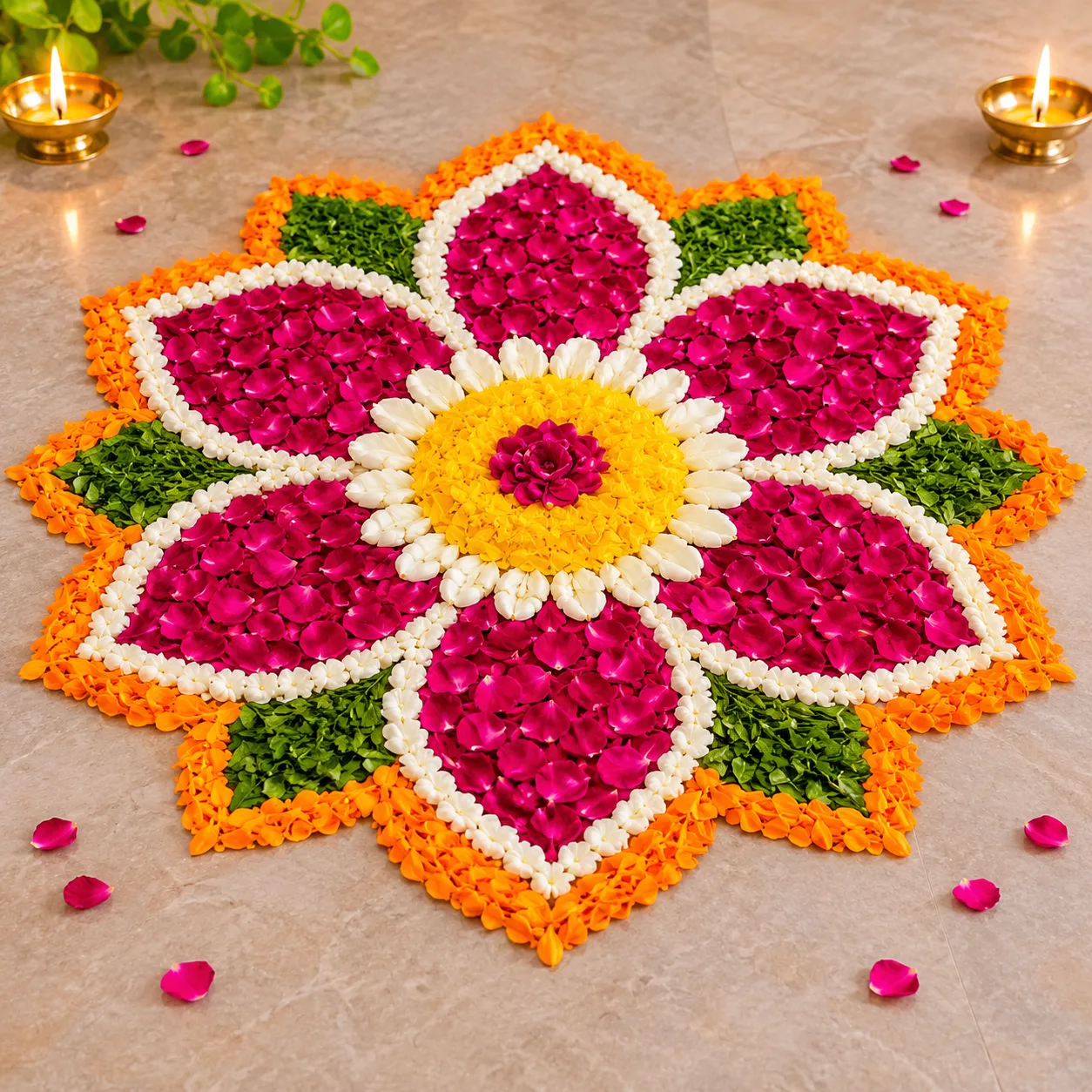
7. Flower Petal Rangoli Design
If you love natural decorations, flower petal rangoli is an excellent option. Unlike traditional rangoli made with coloured powders, this design uses fresh flower petals to create beautiful patterns on the floor.
Marigold, rose, jasmine, chrysanthemum, and other colourful flowers can be used to create attractive designs. Start by drawing a basic outline using chalk or a few flower petals. Then fill different sections with petals of contrasting colours.
For example, use yellow marigold petals for the outer circle, orange petals for the next layer, and red rose petals for the centre. Add green leaves between the petals to create a natural finishing touch.
You can experiment with circular patterns, flower shapes, lotus designs, and simple geometric arrangements. Adding a small decorative lamp in the centre can make the design look even more attractive.
Flower petal rangoli is particularly suitable for Onam, Vishu, Diwali, weddings, housewarming ceremonies, and other special occasions. It is also a wonderful way to create eco-friendly home decorations.
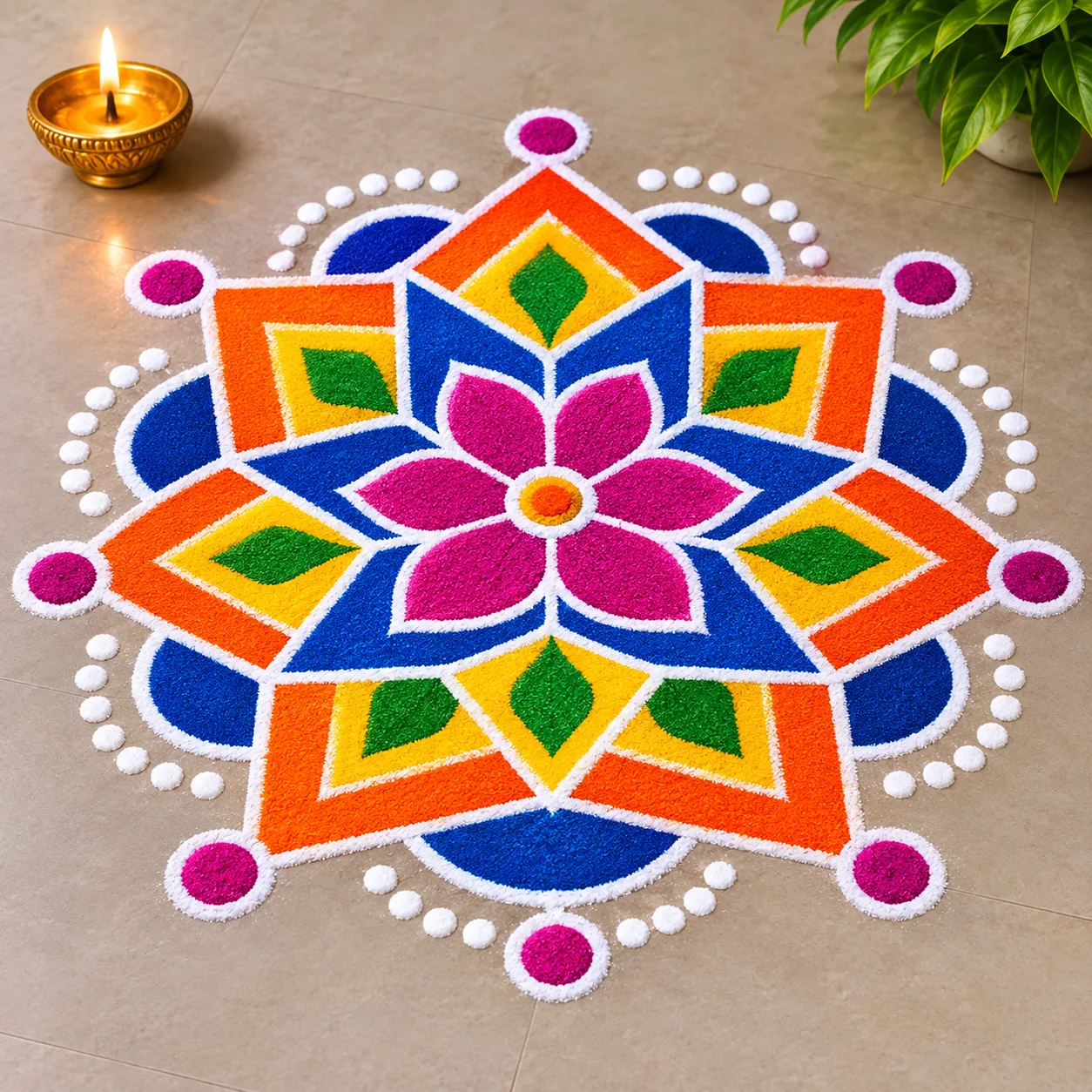
8. Geometric Rangoli Design
Geometric rangoli designs are perfect for people who prefer clean lines, symmetrical patterns, and modern decoration styles. These designs use simple shapes such as triangles, squares, circles, diamonds, and stars to create beautiful floor artwork.
Begin by drawing a small square or diamond in the centre. Surround it with additional geometric shapes arranged in a symmetrical pattern. You can create multiple layers using different colours to make the design more attractive.
A combination of blue, white, yellow, and pink can give your rangoli a modern appearance. For a traditional festive look, try red, orange, green, and yellow.
You don’t need advanced drawing skills to create this design. Using a ruler, chalk, or simple stencils can help you achieve neat lines and balanced shapes.
Geometric rangoli is suitable for modern homes, apartment entrances, balconies, and living room floors. It is also a great choice when you want something different from traditional floral patterns.
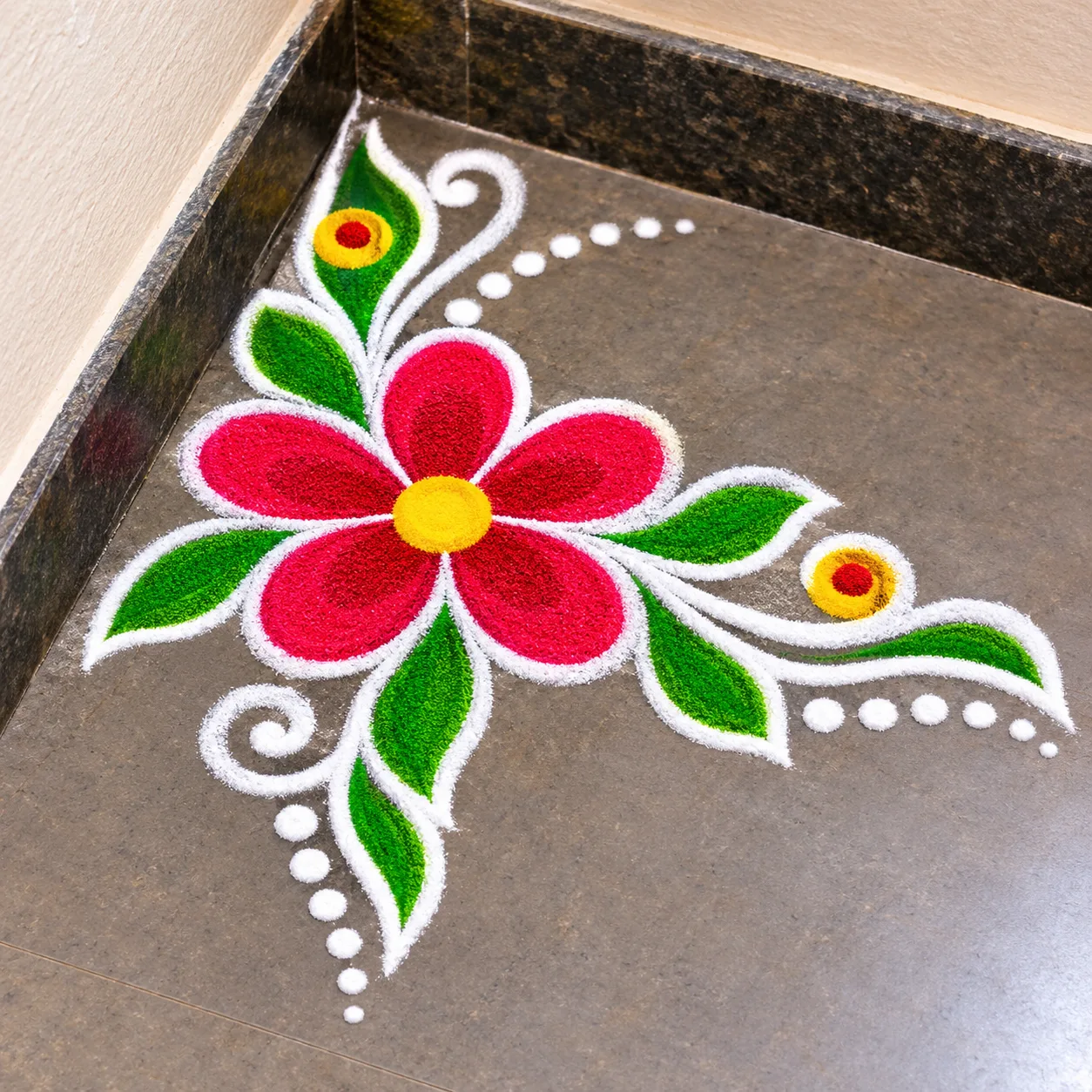
9. Small Corner Rangoli Design
Not every rangoli needs to cover a large area. Small corner rangoli designs are an excellent option for decorating limited spaces without creating complicated patterns. They are especially useful for apartments and homes with narrow entrances.
You can create a small flower, a simple diya, a butterfly, or a circular pattern in one corner of your entrance. Use two or three bright colours to make the design look neat and attractive.
Another idea is to create a half-flower pattern along the corner of a wall or staircase. Add small dots and leaf patterns around the design to give it a decorative appearance.
If you want a traditional look, use white rice flour to create the outline and fill selected sections with coloured powders. You can also use flower petals for a natural finish.
Small corner rangoli designs are ideal for everyday decoration because they take very little time to create. They are also suitable for decorating doorways, staircase corners, balconies, and prayer areas.
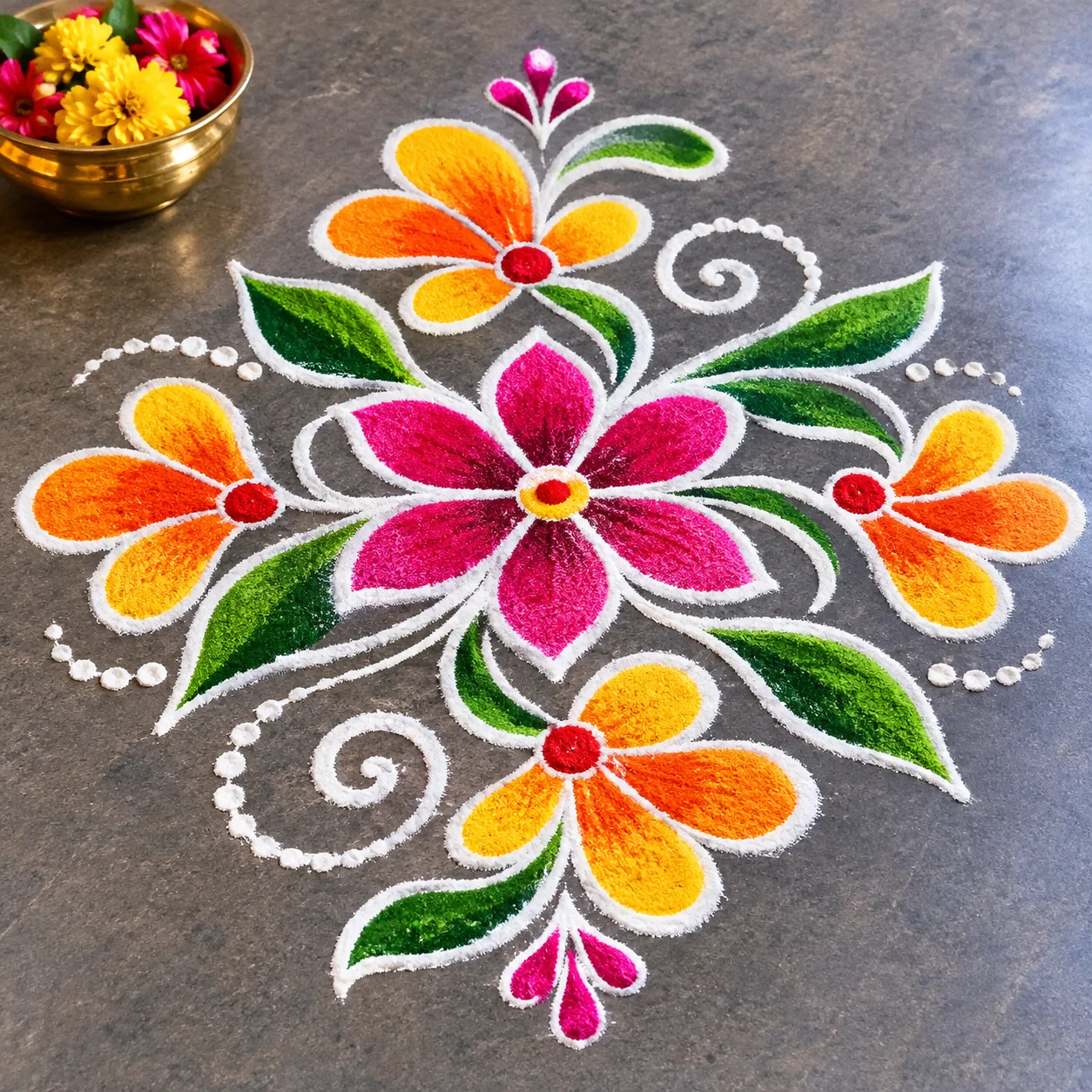
10. Freehand Rangoli Design
Freehand rangoli is a wonderful choice for people who enjoy expressing their creativity. Unlike designs that follow strict geometric patterns or symmetrical arrangements, freehand rangoli allows you to experiment with different shapes, colours, and artistic elements.
You can create flowers, leaves, birds, butterflies, traditional motifs, and abstract patterns without following a fixed design. Start with a simple outline and gradually add decorative elements around it.
For beginners, it is better to start with basic shapes such as petals, circles, curves, and leaves. Once you become comfortable, you can combine these elements to create more detailed artwork.
Use bright colours such as pink, purple, orange, green, and yellow to make the rangoli visually appealing. White powder can be used to highlight the borders and add fine details.
Freehand rangoli is suitable for almost every part of your home, including the entrance, courtyard, staircase landing, and living room. It is also a great activity for families, allowing children and adults to enjoy creating colourful decorations together.
Tips to Make Your Home Rangoli Look More Beautiful
Creating a beautiful rangoli does not always require professional artistic skills. A few simple techniques can make even the smallest design look impressive.
Choose the right location: The entrance is one of the most popular places for rangoli decoration. However, you can also create designs in the courtyard, balcony, prayer room, or staircase landing. Choose a clean and flat surface for the best results.
Clean the floor before starting: Always sweep and clean the floor before creating a rangoli. Dust and moisture can affect the appearance of coloured powders and make the design difficult to maintain.
Use attractive colour combinations: Choose colours that complement each other. Yellow and orange create a traditional festive appearance, while pink and purple give a softer look. White can be used to highlight outlines and small details.
Start with simple patterns: If you are a beginner, start with circular, floral, or dot-based designs. Once you gain confidence, experiment with peacock, lotus, and geometric patterns.
Use stencils for neat designs: Rangoli stencils are useful for creating symmetrical patterns, especially when you have limited time. They can help you achieve neat shapes without much effort.
Experiment with natural materials: Flower petals, rice flour, turmeric, and other natural materials can be used to create beautiful traditional decorations. They are especially useful for people who prefer eco-friendly rangoli ideas.
Add diyas and decorative elements: Small earthen lamps, flower petals, and decorative candles can enhance the appearance of your rangoli. Make sure that open flames are placed safely away from loose powders and flowers.
Conclusion
Rangoli is more than just a colourful floor decoration. It is a beautiful expression of Indian culture, creativity, and tradition. Whether you prefer simple floral patterns, elegant lotus designs, colourful peacock artwork, or traditional dot kolam, there are plenty of ways to make your home look welcoming and festive.
The 10 simple and beautiful rangoli designs shared above are suitable for different spaces and occasions. You can create them at your main entrance, staircase, courtyard, balcony, or living room using coloured powders, flower petals, rice flour, and other easily available materials.
You don’t need to be an expert to make beautiful rangoli. Start with simple patterns, experiment with different colour combinations, and gradually develop your own creative style. Choose a design that matches your home and occasion, and transform an ordinary floor into a beautiful piece of traditional artwork.
Frequently Asked Questions (FAQs)
1. Which rangoli design is best for home entrances?
Floral, lotus, circular, and peacock rangoli designs are excellent choices for home entrances. They look colourful, welcoming, and traditional. You can choose a design based on the available space and the occasion.
2. Which rangoli designs are easiest for beginners?
Circular rangoli, simple floral rangoli, small corner rangoli, and basic dot patterns are easy for beginners. These designs use simple shapes and do not require advanced drawing skills.
3. What materials are used to make rangoli designs?
Common rangoli materials include coloured powders, white rice flour, flower petals, chalk powder, and natural colours. You can also use turmeric, rice, and flower leaves to create traditional designs.
4. How can I make rangoli designs without using colours?
You can create beautiful rangoli designs using white rice flour, flower petals, rice grains, or chalk. Traditional kolam patterns made with white rice flour are especially popular for everyday home decoration.
5. Which rangoli designs are suitable for Diwali?
Diya rangoli, lotus rangoli, floral rangoli, peacock rangoli, and colourful circular patterns are popular choices for Diwali. You can decorate them with small earthen lamps and flower petals.
6. How can I make rangoli designs look neat and attractive?
Clean the floor before starting, draw the outline carefully, use complementary colours, and maintain symmetrical patterns. Using stencils and small decorating tools can also help create neat designs.
7. Can I make rangoli designs on staircase steps?
Yes. Small floral, geometric, and corner rangoli patterns can be created on wide staircase landings or suitable step surfaces. Make sure the designs do not make walking surfaces slippery or create a tripping hazard.
8. Which rangoli designs are best for daily home decoration?
Simple dot kolam, small floral patterns, circular rangoli, and corner designs are ideal for everyday decoration. They are easy to create, require fewer materials, and can be completed in a short time.
9. Are flower petal rangoli designs suitable for festivals?
Yes. Flower petal rangoli is especially popular during Onam, Vishu, Diwali, weddings, and other celebrations. Fresh marigold, rose, and chrysanthemum petals can be combined to create colourful traditional patterns.
10. How long does it take to create a simple rangoli?
A small and simple rangoli may take around 5–15 minutes, while medium-sized floral and geometric designs may take 20–30 minutes. More detailed designs can take longer depending on their size and complexity.

Founder of Fashion Design Ideas.