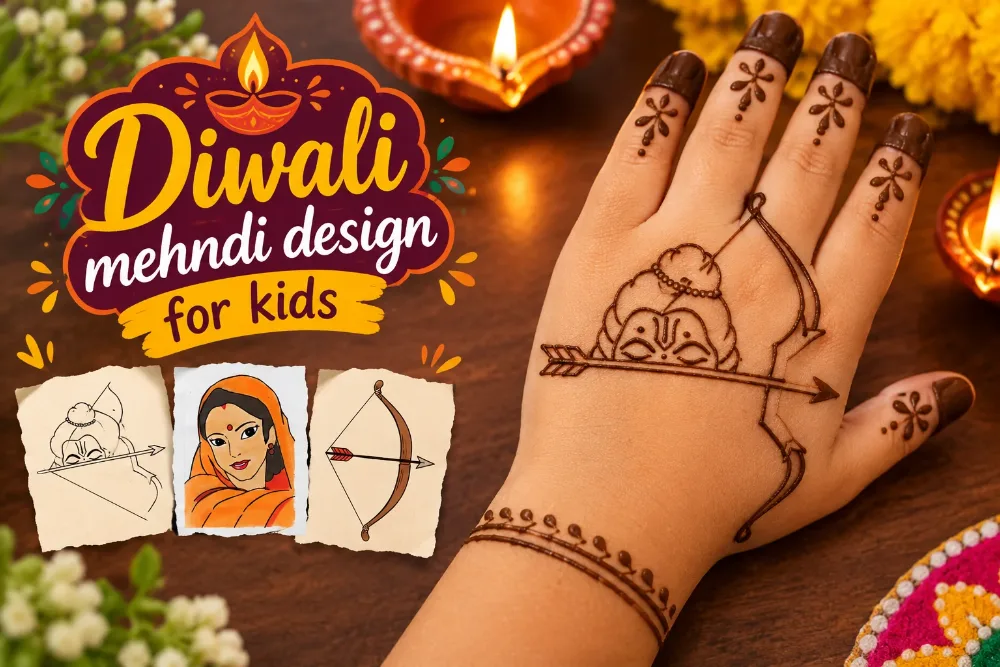
Diwali mehndi for kids works best when the design is simple, symbolic and quick to apply. Think a bow and arrow, a small Lakshmi motif or a few lines of devotional calligraphy. Mehndi is a natural, temporary body art that fades on its own in about one to two weeks, so children can enjoy a festive design without any commitment.
Have you ever noticed how a child’s face lights up when a cone of henna paste comes out before a festival? That small moment of getting dressed up, sitting still for a few minutes and ending up with a design to show everyone is a big part of what makes Diwali feel special for them. This guide from fashion design ideas covers what mehndi is, why it belongs in celebrations, five design ideas with meaning behind them, and how to make the paste at home.
What Is Mehndi, and Why Is It So Loved?
Mehndi, also known as henna, is an ancient form of body art that goes back more than 5000 years. The dye comes from the leaves of the henna plant. The leaves are dried and crushed into a fine powder, then mixed with liquid to make a paste. That paste is used to draw detailed patterns on the skin.
It is natural, temporary and painless. There are no needles and no ink involved, which is why it is generally considered safe for children’s skin. The colour wears off naturally over about one to two weeks.
A Tradition That Carries Meaning
Mehndi is common in Hindu, Sikh and Muslim cultures, and it traditionally stands for joy, celebration and protection. You will see it at weddings, on religious holidays such as Eid and at festivals such as Diwali.
Among married Hindu women, applying mehndi is a sign of love and devotion. It is also believed to keep negative energy away from a newlywed and to bring good luck and prosperity. That is a lot of tradition packed into a small paste cone.
Why Kids Take to It So Easily
Beyond the cultural weight, mehndi is simply a fun way to be creative. Children enjoy it at birthday parties, cultural events, fairs and festivals, and Diwali gives them one more good reason to sit down with a cone and a pattern.
Five Mehndi Designs for Kids This Diwali
Diwali mehndi can lean on devotional themes as much as decorative ones. These five ideas suit that spirit. For younger children, the simpler pieces tend to be the most practical, because small hands do not stay still for long.
1. Lord Rama Mehndi
A Lord Rama design is a natural choice for Diwali. It can be drawn as a small figure on the palm or as symbolic elements around the wrist. For kids, a compact version works better than a full detailed portrait, since it takes less time and still feels meaningful.
2. Goddess Lakshmi Mehndi
Goddess Lakshmi is associated with prosperity, and her image fits Diwali beautifully. A Lakshmi mehndi can sit at the centre of the palm with simple petals or floral lines around it. You can read more about the goddess. if you want to explain the story to your child while the paste dries.
3. The Bow and Arrow Silhouette
This is a striking, minimalist option. It features Lord Rama’s signature Dhanush, the bow, drawn as a silhouette against a sunset or mandala background. Because the shape is bold and the lines are few, it is one of the easiest designs for children to sit through.
4. Devotional Calligraphy
Simple yet powerful, this design features the words “जय श्री राम” (Jai Shree Ram) woven cleanly into geometric lines or floral borders. Older kids who like writing and lettering often enjoy this one, and it looks tidy even on a small hand.
5. Siya Ram Portrait Art
This is a deeply symbolic choice, especially for brides. It captures the divine couple, Lord Rama and Goddess Sita, together, and represents eternal love and devotion. It is more detailed than the others, so it suits older girls or a family occasion where an adult or a skilled artist can handle the fine work.
How to Make Mehndi Paste at Home
Making the paste yourself is easier than it sounds, and children can help with the stirring. Here is the method step by step.
Step 1: Mix the Base
Take around 100g of pure organic mehndi powder and add 3 tablespoons of sugar to a bowl.
Step 2: Add Water and Rest
Pour in around 1 cup of water and stir into a thick paste. Wrap the bowl with plastic and leave it for 30 minutes so the water absorbs well.
Step 3: Add Essential Oil
Stir in 5ml of essential oil until the mixture reaches a pudding consistency. Check that there are no lumps.
Step 4: Let the Colour Release
Cover the bowl and keep it in a warm place for at least 6 hours so the colour can release.
Step 5: Fill the Cone
Stir the paste once more and transfer it into a cone. Your mehndi is ready to use.
Planning ahead helps here. Since the paste needs more than six hours to rest, it is best to prepare it the day before or early on the morning of your celebration.
Also try other mehndi designs:
Frequently Asked Questions
How long does Diwali mehndi last on a child’s hand?
It usually lasts about one to two weeks before wearing off naturally, so a design applied just before Diwali will carry through the festival days.
Is mehndi safe for kids?
Mehndi is a natural, temporary dye with no needles or ink, so it is generally considered safe for children’s skin. Using pure organic mehndi powder, as in the recipe above, keeps the ingredients simple.
Which design is easiest for a young child to sit through?
The bow and arrow silhouette is the simplest, because it has bold shapes and few lines. Devotional calligraphy in a small border is also quick.
Can I make the paste a day before Diwali?
The paste needs to rest for at least 6 hours in a warm place so the colour can release, so preparing it ahead of time fits well into a busy festival schedule.
Why is mehndi part of Diwali celebrations?
Mehndi symbolises joy, celebration and protection in Hindu, Sikh and Muslim cultures, which is why it appears at weddings, Eid and festivals like Diwali.
Few more mehndi designs:
Top Foot Mehndi Design Ideas for Every Festival and Celebration
Founder of Fashion Design Ideas.