
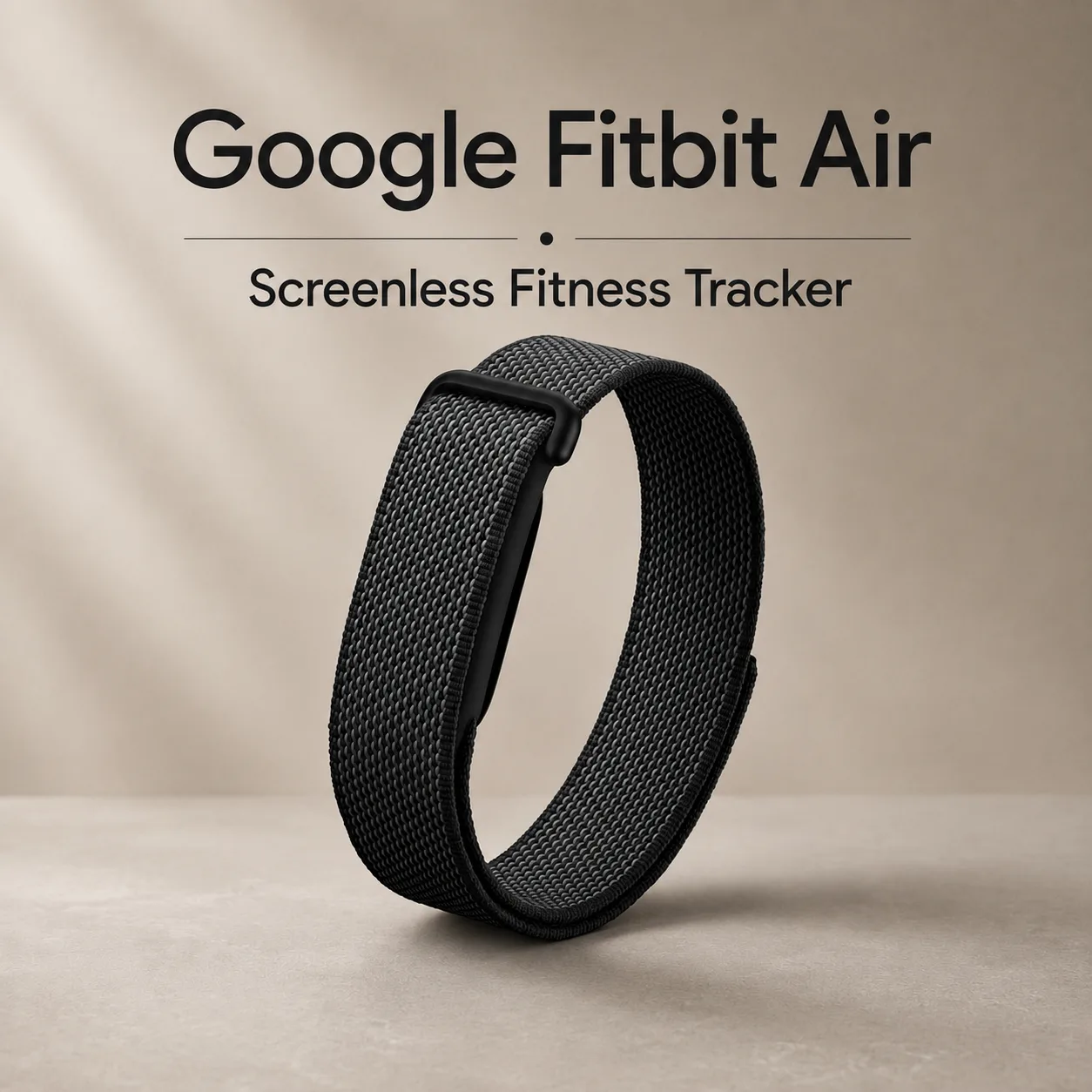
Google appears to be preparing another addition to its wearable ecosystem, and this time the spotlight is on the long-rumoured Fitbit Air, a screenless fitness tracker. The device has reportedly been spotted on Amazon India ahead of any official announcement, sparking speculation that its launch could be just around the corner. While Google has yet to confirm the existence of the product, the appearance of a product listing on one of India’s largest e-commerce platforms strongly suggests that the company is gearing up for a market debut.
The wearable industry has evolved significantly over the past few years. Smartwatches now offer advanced health monitoring, GPS navigation, mobile payments, and even AI-powered features. However, not everyone wants a full-fledged smartwatch. Many users simply want a lightweight device that can track daily activity, monitor sleep, and help them maintain a healthier lifestyle without constant notifications or a large display. This is precisely where the Fitbit Air is expected to fit into Google’s growing portfolio.
The leaked Amazon India listing has generated excitement among fitness enthusiasts, especially those looking for an affordable alternative to premium smartwatches. Although several specifications remain unofficial, the listing offers valuable clues about Google’s strategy and how the Fitbit Air may compete in India’s highly competitive wearable market.
A Surprise Appearance Before the Official Launch
Product listings appearing online before an official announcement have become increasingly common in the technology industry. Retailers often prepare inventory and product pages well before launch dates, sometimes making them visible accidentally. This appears to be what happened with the Fitbit Air.
The Amazon India listing reportedly displayed the product name along with preliminary information before being removed or hidden. Although pricing and complete specifications were not permanently visible, the appearance alone indicates that Google may have already completed distribution planning for the Indian market.
Such early listings usually happen only when products are close to commercial release. This suggests that an official unveiling could happen within the coming weeks, rather than months.
For Indian consumers, this is particularly significant because Google has recently shown greater interest in expanding its hardware presence in the country. Alongside Pixel smartphones, Pixel Buds, and Fitbit products, the company continues to strengthen its position in one of the world’s fastest-growing technology markets.
What is the Fitbit Air?
Unlike traditional smartwatches, the Fitbit Air is expected to focus entirely on health and fitness tracking while removing unnecessary distractions. The “screenless” approach immediately distinguishes it from existing Fitbit devices like the Charge series or the Versa lineup.
Instead of featuring a traditional display, the Fitbit Air may rely on LED indicators, vibration feedback, smartphone connectivity, and voice-guided interactions through the Fitbit app.
The absence of a screen offers several potential benefits.
First, battery life could improve dramatically. Displays are among the largest power consumers in wearable devices. Eliminating the screen allows manufacturers to use smaller batteries while still delivering weeks of usage.
Second, the tracker becomes significantly lighter and more comfortable for continuous wear. Since many people remove smartwatches before sleeping due to discomfort, a compact screenless tracker could encourage 24-hour wear, resulting in more accurate sleep and recovery monitoring.
Third, manufacturing costs can be reduced, making the Fitbit Air an affordable option for first-time fitness tracker buyers.
A Minimalist Approach to Fitness
Wearable technology has reached a stage where many devices attempt to do everything. From receiving messages to answering calls, controlling smart homes, making payments, and even taking ECG readings, today’s smartwatches can feel overwhelming for users who simply want fitness tracking.
Google appears to recognise this gap.
The Fitbit Air could embrace minimalism by concentrating on the features that matter most.
Expected capabilities include:
- Step tracking
- Distance measurement
- Calories burned
- Sleep monitoring
- Heart rate tracking
- Activity recognition
- Exercise tracking
- Smartphone syncing
- Goal reminders
- Silent vibration alerts
Instead of displaying information on the device itself, users would access all detailed health insights through the Fitbit mobile application.
This approach mirrors the growing trend toward invisible technology—devices that quietly collect useful data without demanding constant attention.
Why India Could Be an Important Market
India has become one of the world’s largest wearable markets over the last few years. Affordable fitness bands from brands like Xiaomi, Noise, boAt, Fire-Boltt, and Fastrack have introduced millions of consumers to wearable technology.
However, many of these devices focus heavily on smartwatch-style features rather than fitness accuracy.
Fitbit has long been recognised for its reliable health tracking algorithms, sleep analysis, and activity monitoring. Google’s ownership of Fitbit further strengthens the ecosystem by integrating health data with Android services and Google applications.
Launching the Fitbit Air in India makes strategic sense for several reasons.
The country has a rapidly growing health-conscious population.
Gym memberships continue to rise.
Running communities have expanded in major cities.
Corporate wellness programmes increasingly encourage wearable usage.
Consumers are also becoming more interested in tracking sleep quality, stress levels, and overall fitness instead of simply counting steps.
An affordable Fitbit could appeal to students, professionals, senior citizens, and casual fitness enthusiasts alike.
Possible Hardware Features
Although Google has not officially confirmed the specifications, industry expectations and the leaked listing suggest several likely hardware improvements.
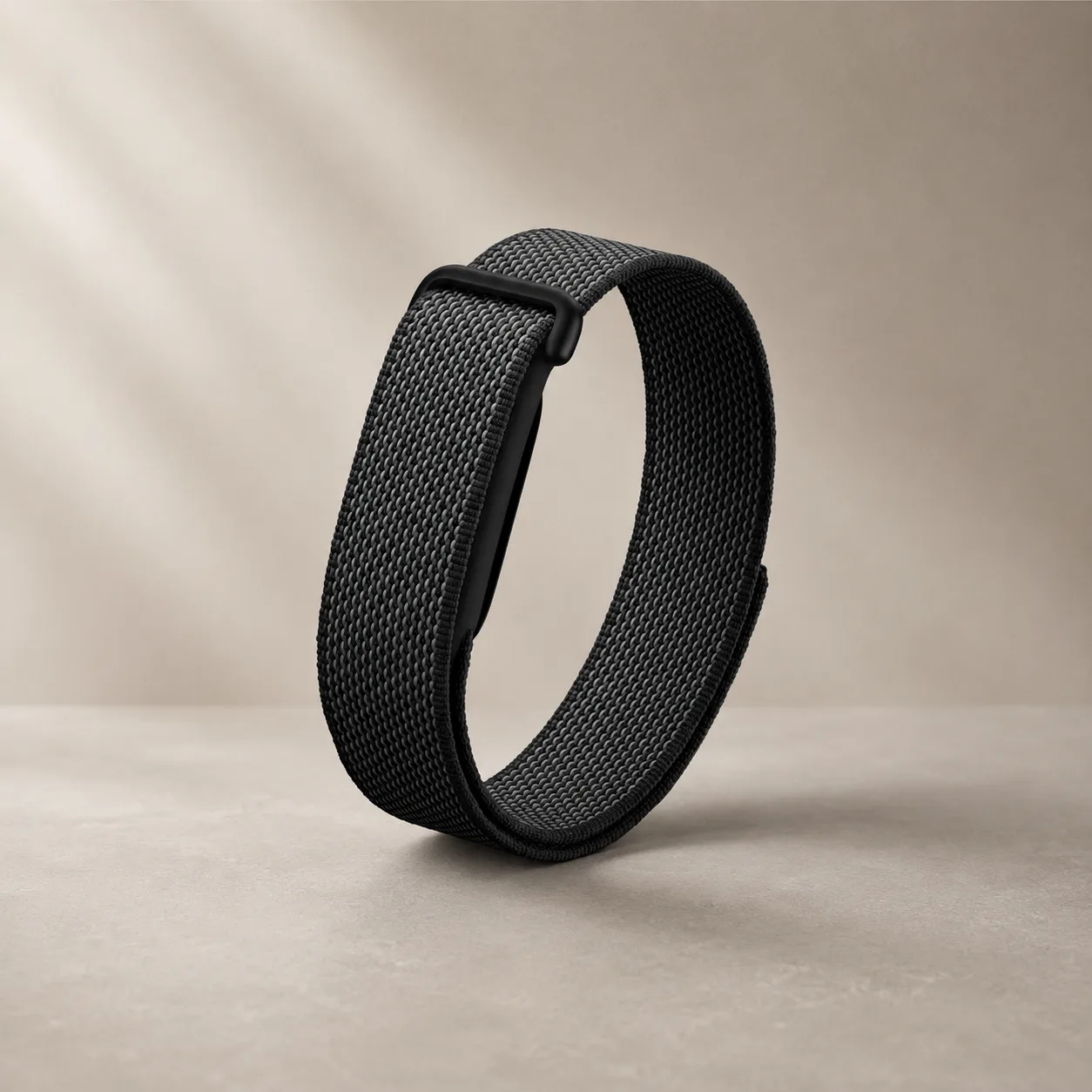
The Fitbit Air is expected to include a lightweight body designed for all-day comfort. A silicone strap with interchangeable bands could allow users to personalise their tracker while maintaining durability for workouts.
Water resistance is almost certain, making the device suitable for running in rain, swimming, or everyday use.
Health sensors may include:
- Optical heart rate sensor
- Motion sensors
- Accelerometer
- Sleep tracking sensors
- Blood oxygen monitoring (depending on model)
Bluetooth connectivity will likely allow seamless pairing with Android smartphones and possibly iPhones.
Because the tracker lacks a display, it may rely on subtle LED lighting patterns to communicate charging status, workout completion, or battery levels.
Battery Life Could Become a Major Selling Point
Battery life has become one of the biggest frustrations for smartwatch owners.
Many premium smartwatches require charging every day or every other day, especially when GPS and continuous heart rate monitoring are enabled.
A screenless Fitbit Air changes that equation.
Without a display consuming power, the device could potentially offer battery life ranging from one week to several weeks on a single charge.
This longer battery life benefits users in several ways.
Continuous sleep tracking becomes practical.
Long vacations no longer require carrying charging accessories.
Fitness tracking remains uninterrupted.
Users spend less time worrying about battery percentages and more time focusing on their health goals.
For many buyers, extended battery life may become the strongest reason to choose the Fitbit Air over a traditional smartwatch.
Integration with Google’s Health Ecosystem
Google has invested heavily in digital health since acquiring Fitbit.
The Fitbit app continues to provide comprehensive activity reports, heart rate trends, workout summaries, sleep scores, and wellness insights.
The Fitbit Air would likely become another entry point into this ecosystem.
Users may receive:
- Personalised activity goals
- Weekly health reports
- Sleep recommendations
- Guided breathing sessions
- Exercise summaries
- Health trends over time
Integration with Google services could eventually include improved compatibility with Google Health Connect, allowing data sharing across supported fitness and healthcare applications.
This ecosystem approach increases the value of even an entry-level wearable.
Competition Will Be Intense
If launched in India, the Fitbit Air will enter an extremely competitive market.
Brands like Noise, boAt, Fire-Boltt, Xiaomi, Amazfit, Huawei, and Samsung already offer multiple wearable devices across different price segments.
However, Google’s biggest advantage may not be hardware alone.
Fitbit has built its reputation on health accuracy rather than feature quantity.
Many low-cost smartwatches advertise hundreds of sports modes and flashy watch faces but often provide inconsistent health measurements.
Fitbit, on the other hand, has consistently focused on reliable activity tracking backed by years of software refinement.
Consumers looking for dependable fitness data rather than smartwatch gimmicks may find the Fitbit Air particularly appealing.
Could Google Be Redefining Fitness Trackers?
The wearable market has gradually shifted toward larger screens.
Ironically, Google may now be reversing that trend.
The Fitbit Air suggests that screenless technology still has a meaningful place in wearable devices.
Removing the display reduces distractions while encouraging healthier digital habits.
Instead of constantly checking notifications, users interact with the device only when necessary.
All detailed analysis remains available through the companion smartphone application.
This philosophy aligns with growing conversations around digital wellbeing.
Technology should assist users rather than constantly compete for their attention.
A screenless fitness tracker embodies this idea perfectly.
Pricing Expectations
The Amazon India listing did not permanently reveal pricing, but industry observers expect Google to position the Fitbit Air competitively.
Considering India’s price-sensitive wearable market, the tracker could be introduced somewhere in the affordable to mid-range segment.
A competitive launch price would allow Google to target:
- Students
- Office professionals
- First-time wearable buyers
- Health-conscious seniors
- Casual fitness enthusiasts
Affordable pricing would also help Fitbit regain visibility in a market increasingly dominated by local brands.
Who Should Consider the Fitbit Air?
Not every user needs a premium smartwatch costing several hundred dollars.
The Fitbit Air appears designed for people who prioritise health over smart features.
Potential buyers include:
People beginning their fitness journey who want accurate activity tracking without investing heavily.
Office workers looking to improve daily movement and sleep habits.
Runners who prefer lightweight wearables.
Individuals who dislike constant smartphone notifications on their wrists.
Users wanting longer battery life than conventional smartwatches provide.
Older adults seeking simple health monitoring without complicated interfaces.
For these audiences, a screenless tracker may actually be more practical than a feature-rich smartwatch.
What the Leak Means for Google’s Hardware Strategy
The Amazon India listing offers more than just evidence of an upcoming product.
It reflects Google’s broader hardware ambitions.
The company has steadily expanded beyond software into smartphones, earbuds, smart home devices, watches, and health technology.
Introducing a minimalist Fitbit Air would diversify Google’s wearable portfolio by addressing users who find existing smartwatches either too expensive or unnecessarily complex.
This layered product strategy mirrors what successful technology companies often pursue—offering entry-level, mid-range, and premium products to appeal to different customer segments.
If successful, the Fitbit Air could become Google’s most accessible wearable.
Final Thoughts
The appearance of the Google Fitbit Air on Amazon India has fuelled strong speculation that an official launch is imminent. Although Google has yet to confirm the product, retailer listings are often reliable indicators that commercial availability is approaching.
If the rumours prove accurate, the Fitbit Air could introduce a refreshing alternative in today’s crowded wearable market. By eliminating the screen and focusing on essential health tracking, Google appears to be prioritising comfort, simplicity, longer battery life, and reliable fitness insights over flashy smartwatch features.
For Indian consumers, the device could offer an attractive balance between affordability and Google’s trusted Fitbit health platform. Rather than competing directly with feature-packed smartwatches, the Fitbit Air seems positioned as a lightweight wellness companion that quietly supports healthier lifestyles without adding digital distractions.
As wearable technology continues to evolve, many users are beginning to value simplicity just as much as innovation. If Google delivers accurate fitness tracking, excellent battery life, seamless smartphone integration, and competitive pricing, the Fitbit Air could become one of the most interesting fitness wearables to launch in India this year. Until Google makes an official announcement, the Amazon India sighting remains an intriguing preview of what may soon become the company’s next major step in personal health technology.

Founder of Fashion Design Ideas.