
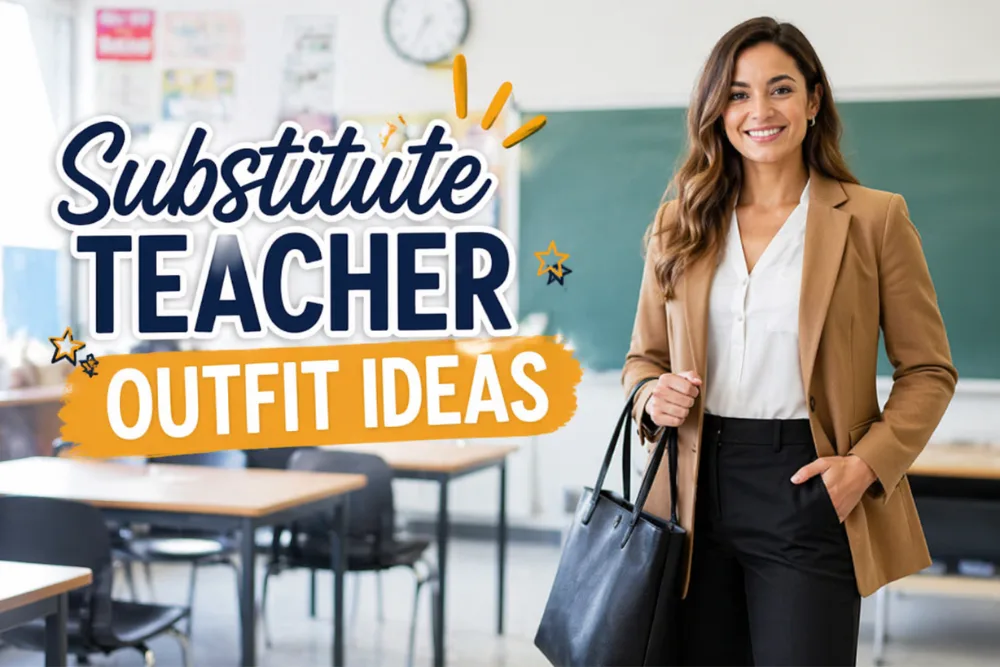
When deciding what to wear as a substitute teacher, choose business casual or professional clothing that looks neat, feels comfortable, and helps you appear confident and in control. Well fitted tops, solid slacks, and practical shoes create a polished look that supports classroom management and builds immediate trust with students and staff.
Why your outfit matters as a substitute teacher
Your appearance plays a direct role in how students perceive you, especially when you are stepping into a classroom where you are not a familiar face. Dressing professionally sets a clear tone from the moment you walk in, showing that you take the role seriously and expect respectful behavior. A clean, well put together outfit communicates authority, while also helping students understand the expectations for conduct and discipline. Schools value substitutes who present themselves professionally because it reflects positively on the learning environment and maintains continuity in classroom culture.
At the same time, your clothing affects your own mindset. When you feel appropriately dressed, you are more likely to feel confident, calm, and prepared to handle different classroom situations. This psychological edge can make a noticeable difference, especially when managing new students, unexpected challenges, or varying lesson plans throughout the day.
Understanding the standard dress code expectations
Most schools expect substitute teachers to follow a business casual or professional dress code. This standard strikes a balance between formal and practical, ensuring that you look polished without sacrificing comfort. Business casual attire typically includes structured tops, modest bottoms, and comfortable footwear that supports movement throughout the day.
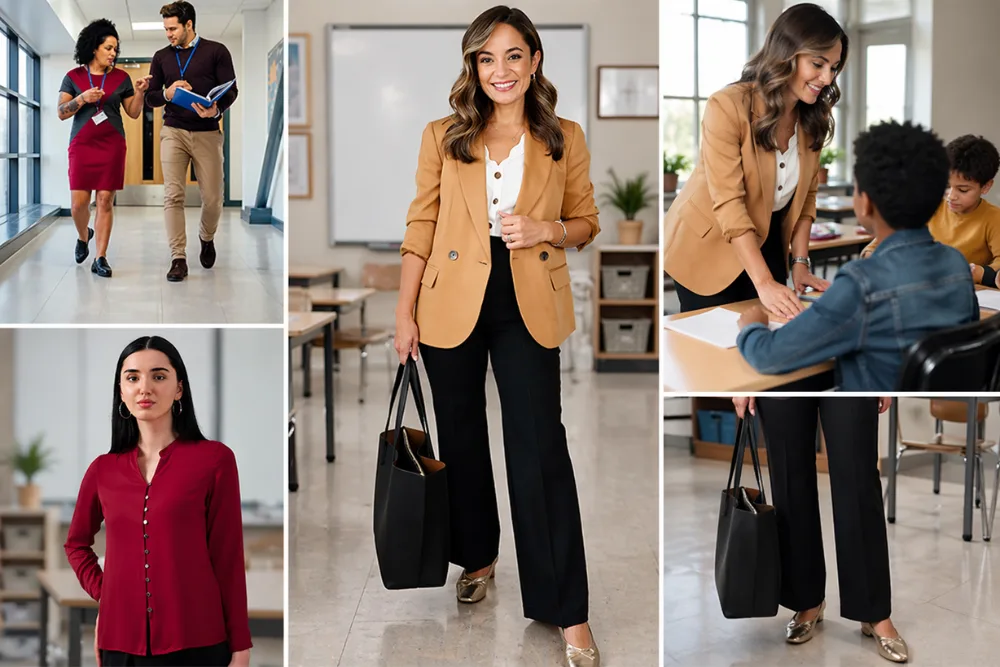
Professional dress goes a step further, with more tailored pieces such as collared shirts or blouses paired with dress slacks or skirts. While the exact expectations may vary slightly between schools, the underlying principle remains consistent. Your clothing should be neat, modest, and appropriate for an educational setting. Avoid anything that could be distracting, overly casual, or unsuitable for interacting with students of different age groups.
Choosing the right tops for a professional look
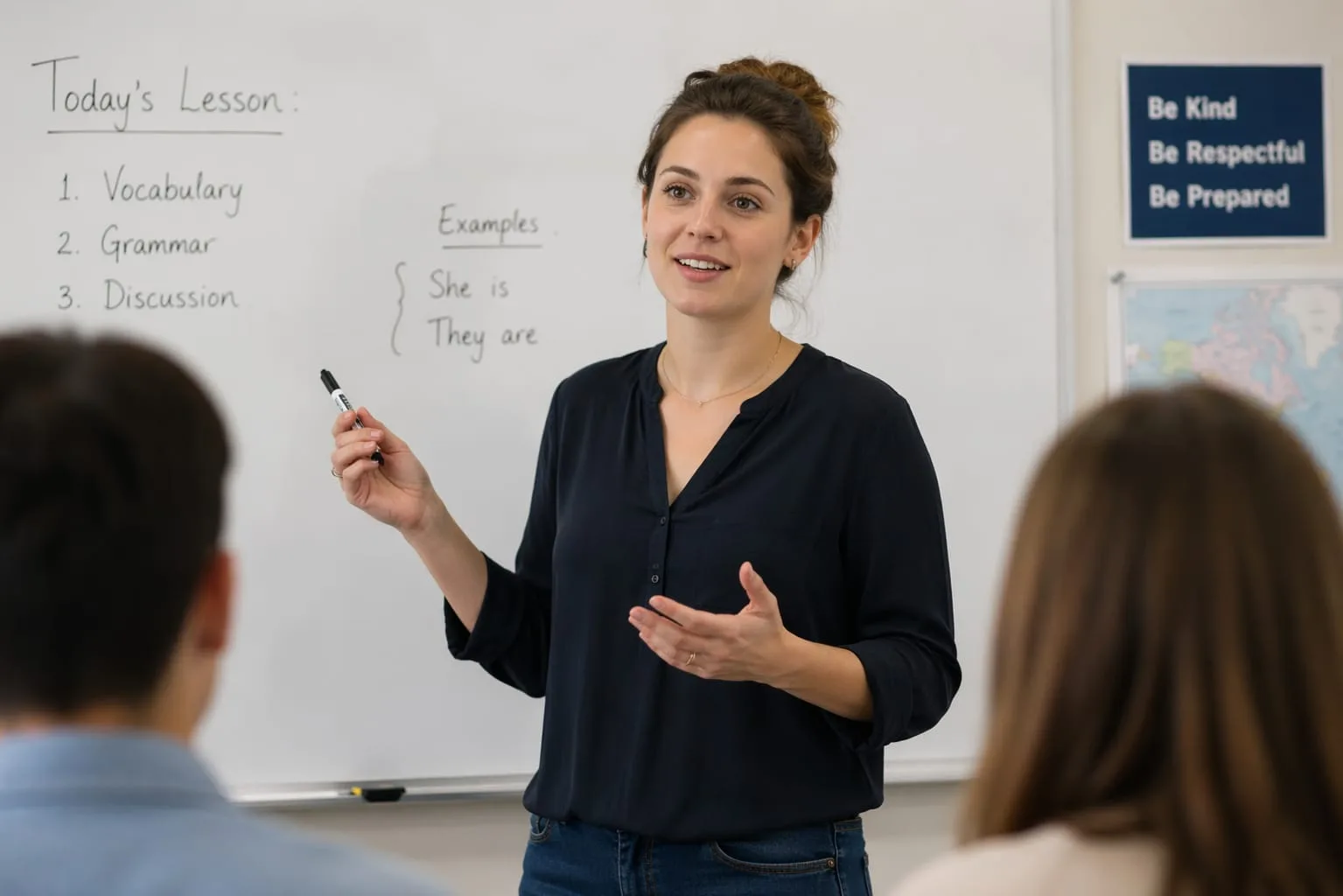
Tops are one of the most noticeable elements of your outfit, so selecting the right ones is essential. Neatly ironed button up collared shirts, blouses, polo shirts, and knitted sweaters or cardigans are all excellent choices. These options provide a structured and polished appearance while remaining comfortable enough for a full day of teaching.
A well chosen top should fit properly, avoiding anything too tight or too loose. Neutral or soft colors often work best, as they create a calm and approachable presence in the classroom. Layering with a cardigan or sweater can also be helpful, especially in environments where classroom temperatures vary. This allows you to adjust your outfit without compromising your overall professional look.
Selecting appropriate bottoms for comfort and professionalism
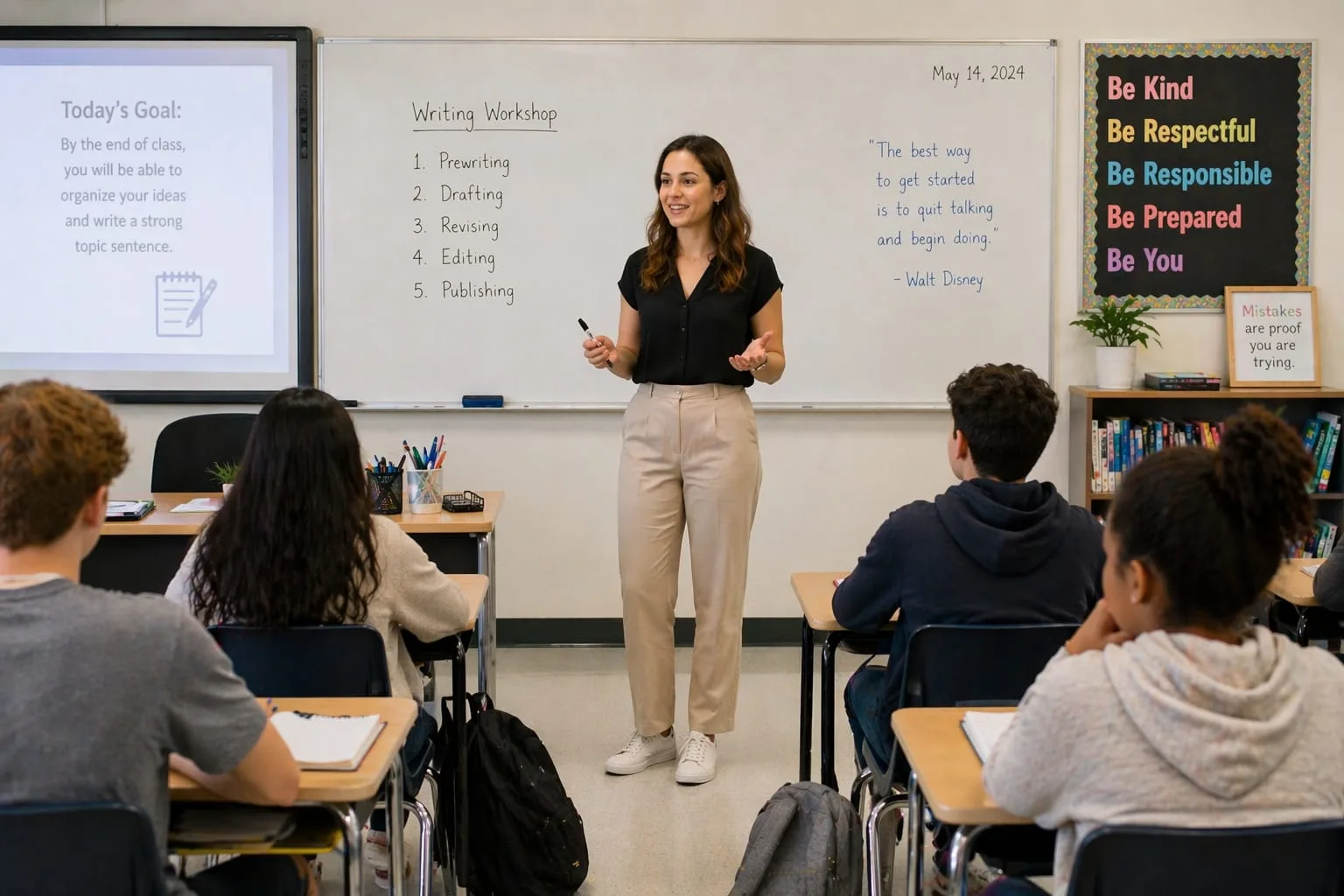
When it comes to bottoms, solid colored slacks are one of the most reliable and widely accepted options. They offer both comfort and a professional appearance, making them suitable for almost any teaching assignment. Skirts and dresses are also acceptable, provided they are modest and practical for the activities you may need to perform.
It is important to consider the age group you will be teaching. For example, if you are working with younger students, you may find yourself sitting on the floor, bending down, or engaging in hands on activities. In such cases, slacks may be a more practical choice than skirts or dresses. The goal is to ensure that your clothing allows you to move freely and comfortably without worrying about maintaining modesty or adjusting your outfit throughout the day.
Footwear choices that support long teaching hours
Footwear is often overlooked, yet it plays a critical role in your overall comfort and performance. Substitute teachers spend a significant portion of the day standing, walking, and moving around the classroom. Comfortable dress shoes or flats are highly recommended, as they provide the support needed for extended periods on your feet.
Shoes should be closed, secure, and suitable for a professional environment. While style is important, comfort should always be the priority. Choosing footwear that prevents discomfort or fatigue will help you stay focused on teaching rather than dealing with sore feet or distractions.

Using accessories to express personality appropriately
Accessories offer a subtle way to express your individuality while maintaining a professional appearance. Kid friendly novelty socks, simple jewelry, and tasteful accessories can add a touch of personality to your outfit. These small details can even serve as conversation starters with students, helping you build rapport in a natural and engaging way.
However, it is important to keep accessories practical and safe. Avoid items that could get caught on classroom furniture or interfere with your movement. The goal is to enhance your appearance without creating distractions or potential hazards. A balanced approach ensures that your accessories complement your outfit rather than overshadow it.
What to avoid when dressing as a substitute teacher
Understanding what not to wear is just as important as knowing what to wear. Items such as jeans, leggings, exercise wear, and lounge wear are generally considered too casual for a professional school environment. These types of clothing may send the wrong message and undermine your authority in the classroom.
Footwear like sneakers, sandals, or open toed shoes is also typically discouraged, as it does not align with standard professional expectations. Clothing that is tight or revealing should be avoided, as it may be inappropriate for an educational setting and could create discomfort for both you and your students.
Hats are usually not permitted in classrooms, unless they are worn for religious reasons. Visible tattoos that may be considered inappropriate should be covered, and many substitutes choose to cover tattoos altogether to minimize distractions. Additionally, strong or offensive odors, including heavy perfumes or lingering smells, should be avoided to maintain a pleasant and respectful environment.
The importance of comfort in your daily routine
Comfort is a key factor when deciding what to wear as a substitute teacher. Your day will likely involve standing, reaching, bending, and sometimes kneeling, depending on the activities planned. Wearing clothing that allows you to move freely and comfortably ensures that you can focus on teaching rather than adjusting your outfit.
Choosing breathable fabrics and well fitting garments can make a significant difference in how you feel throughout the day. When you are comfortable, you are better equipped to handle the physical and mental demands of teaching. This, in turn, contributes to a more positive and effective classroom experience.
Adapting your outfit based on the age group
Different age groups require different approaches, not only in teaching style but also in clothing choices. Younger students often require more physical interaction, which means your outfit should allow for flexibility and ease of movement. In these situations, practical clothing that supports active engagement is essential.
For older students, the focus may shift slightly toward maintaining a more formal appearance. While comfort remains important, a slightly more structured outfit can help reinforce authority and professionalism. Understanding the needs of each age group allows you to make informed decisions about your clothing, ensuring that you are prepared for any situation.
Dressing for specific teaching situations
There are occasions when the standard dress code may be adjusted to fit the requirements of a specific class. For example, if you are substituting for a physical education class, athletic wear may be appropriate. This can include t shirts, athletic pants, sweatpants, or longer shorts that provide adequate coverage.
Even in these situations, it is important to maintain a level of professionalism. Clothing should still be neat, modest, and suitable for interacting with students. Adapting your outfit to the context of the class demonstrates flexibility while maintaining respect for the school environment.
Creating a professional image that builds trust
Your clothing is a powerful tool for establishing credibility and trust in the classroom. A calm, capable, and professional appearance helps students feel secure and more willing to engage in the learning process. It also reassures school staff that you are prepared to handle the responsibilities of the role.
Consistency in your appearance reinforces your reliability as a substitute teacher. When you consistently dress in a professional manner, you create a positive impression that can lead to more opportunities and stronger relationships within the school community. Over time, this attention to detail can contribute to your overall success and reputation.
Conclusion
Knowing what to wear as a substitute teacher is about more than just following a dress code. It is about presenting yourself in a way that supports your role, enhances your confidence, and creates a positive learning environment. By choosing professional, comfortable, and appropriate clothing, you set the stage for a successful day in the classroom. Your outfit becomes a reflection of your commitment, helping you manage students effectively while maintaining a calm and respectful atmosphere.
Frequently Asked Questions
What is the best outfit for a substitute teacher
A business casual outfit with a neat top, solid slacks, and comfortable closed shoes is usually the best choice.
Can substitute teachers wear jeans
Jeans are generally not recommended, as they are considered too casual for most school environments.
Are sneakers acceptable for substitute teachers
Sneakers are typically avoided unless you are teaching a physical education class where athletic wear is appropriate.
Can substitute teachers wear dresses
Yes, dresses are acceptable, but they should be modest and practical for the activities you may need to perform.
How can I stay comfortable while looking professional
Choose well fitting clothes made from breathable fabrics, and wear supportive shoes that allow you to move easily throughout the day.
Do accessories matter for substitute teachers
Accessories can add personality, but they should be simple, safe, and not distracting in the classroom.

Founder of Fashion Design Ideas.